Why Does Campus Hiring Volume Make Consistent Candidate Screening So Hard?
Author: Xobin Editorial Team
15 October 2026 · 8 min read
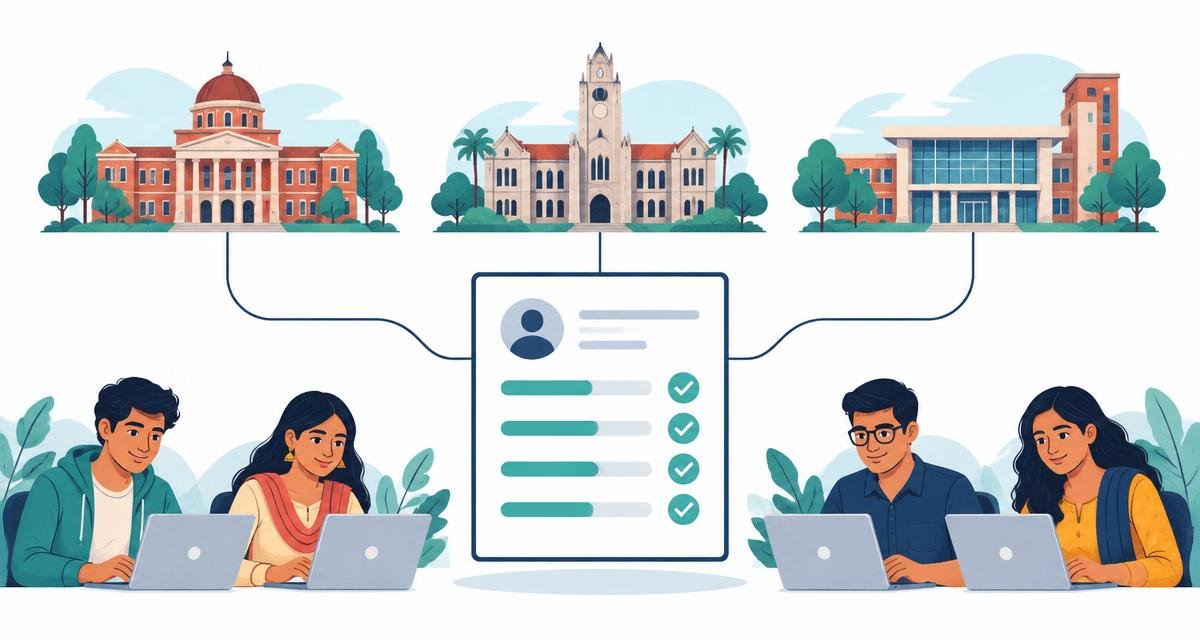
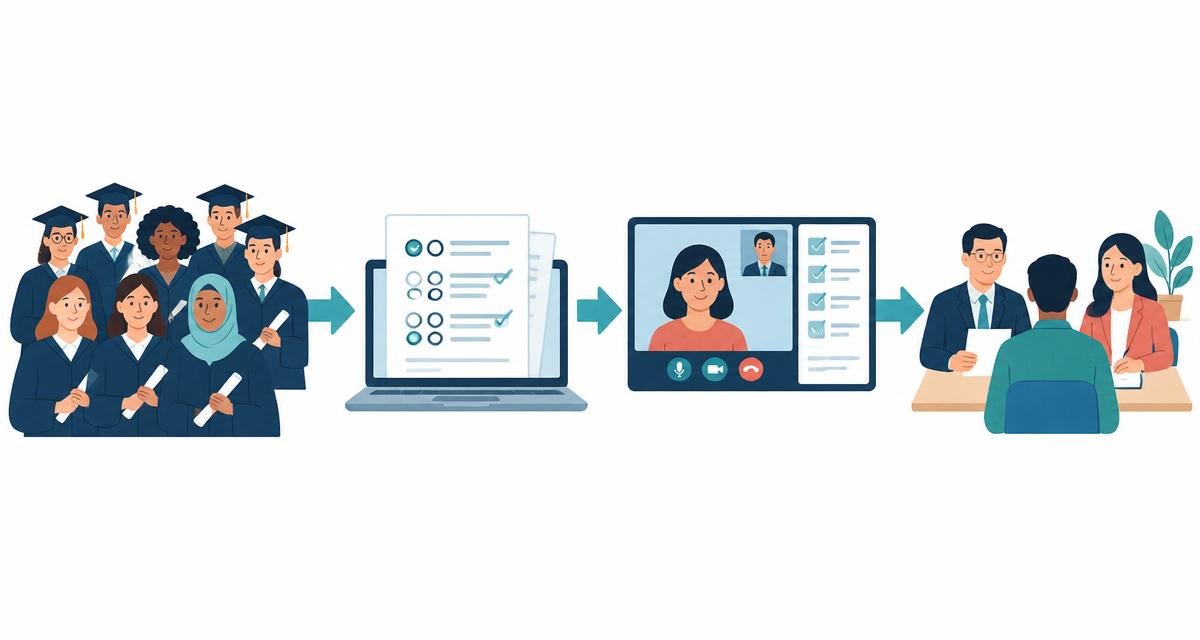
Campus screening loses consistency at volume because every drive ends up slightly different. Different colleges get different test versions, questions leak from one campus to the next, grading scales don't match and dozens of panelists score interviews their own way. Use one common assessment for every campus, randomize questions from a large bank, score early rounds automatically against the same rubric and save human interviews for a much shorter list.
Imagine a placement season. Your team visits eleven colleges in five weeks. The first campus gets the test the team wrote in July. By the fourth, someone has tweaked a few questions because students at campus two posted them online. By the eighth, three new panelists have joined to cover the extra interviews, and nobody has briefed them on what a "good" answer looks like.
In December, two students with almost identical ability get different outcomes because they sat in different halls, on different days, in front of different people.
That isn't a recruiter problem. It's what happens when a process built for one drive gets stretched across twenty. Ourcampus recruitment guide covers how to plan a campus program. This post deals with one specific part of it: keeping the screening fair and comparable when the numbers get big.
Key Takeaways
At campus volume, the biggest threat to fair screening is variation between drives, not the students themselves.
Different test versions, leaked questions and mismatched grading scales make students from different colleges hard to compare.
A common, proctored assessment with randomized questions gives every student the same starting line.
Automated scoring for early rounds removes most of the panel-to-panel variation.
Human interviews work best on a short, already-screened list, with shared questions and scoring anchors.
Why does screening get inconsistent during campus hiring?
Most of the usualcampus hiring challenges get worse with scale. Consistency is the one that breaks quietly. Nobody decides to treat students differently. It just happens, one small change at a time.
Every drive drifts a little
A test written for the first campus rarely survives untouched to the last. Someone adds a question, drops a section that ran long or swaps in a harder problem because the last batch scored too high. Each change makes sense at the moment. By the end of the season, students at the first and last colleges took noticeably different tests.
Questions travel faster than your team
Campus drives often run one after another. Students at the next college hear about the questions within hours, through seniors, group chats or forums. If the question set stays the same, later campuses walk in with an advantage the earlier ones didn't have.
Grades don't mean the same thing everywhere
An 8.2 CGPA at one university and an 8.2 at another can reflect very different grading. Employers are noticing. InNACE's Job Outlook 2026 survey, just 42% of employers said they screen candidates by GPA, down from 73% in 2019. Among employers in the same survey, 70% now report using skills-based hiring for entry-level roles, up from 65% a year earlier.
More panelists means more opinions
Volume pulls in extra interviewers: managers from other teams, recent hires, whoever has a free afternoon. Each one brings their own idea of what a strong fresher looks like. That kind of drift is a problem in any hiring, and we cover it in detail in why interview scores change depending on the interviewer. Campus season just multiplies it.
Rushed rounds get scored on impressions
When a panel has forty students to see before the bus leaves, group discussions and interviews get shorter. Notes get thinner. Scores lean more on confidence and English fluency than on the skills the role needs.
How do you compare students from different colleges fairly?
Put everyone through the same measure. Here's how the usual campus signals compare:
Signal
The problem at volume
A fairer option
CGPA or percentage
Grading scales and difficulty differ between universities
A common skills and aptitude test scored the same way for everyone
College tier
Rewards where a student got in, not what they can do now
Look at test performance first, college second
Resume and projects
Freshers' resumes look alike, and project depth is hard to judge from a line
A short task or simulation related to the role
Group discussion
The loudest student often gets the credit
Structured, individually scored exercises
Panel interview
Scores depend on which panel the student lands with
Shared questions and anchors, or a structured AI interview for the first round
None of this means ignoring academics. It means treating grades and college names as context, and using a common test to decide who moves forward.
How do you keep screening consistent across every campus drive?
Decide the rules before the season starts, then don't let individual drives rewrite them.
Lock one assessment blueprint for the whole season
Agree on the sections, the skills each one measures, the time limit and the pass mark before the first campus. Every college gets the same blueprint. If something needs fixing mid-season, change it for everyone and note the date, so you know which batches took which version.
Draw questions from a large, randomized bank
This is the fix for leakage. If each student gets a different set of questions of the same difficulty, sharing answers stops helping. The bank needs to be big enough to support it. Xobin's, for example, holds more than 180,000 technical and non-technical questions.Adaptive assessments, which adjust difficulty based on each answer, make shared answers even less useful and keep the test shorter.
Proctor every drive the same way
On-campus labs, home laptops and off-campus centres all need the same rules. Use the same identity checks andAI proctoring settings everywhere, so a score from one setup means the same as a score from another.
Score early rounds automatically
Aptitude, coding and domain questions can be scored without a person, which removes panel variation from the stage where volume is highest. Written English and spoken communication can be scored against a common standard too, for example with aCEFR-based language test, instead of a panelist's impression.
Use a structured first interview
For the round after the test, give every student the same questions and the same scoring rubric. When panels are stretched thin, a structured AI interview can take this round.Controlled AI interviews keep the questions fixed for every candidate, which is exactly what you want when hundreds of students are going through the same stage.
Save human panels for the final list
By the time students reach a manager, the test and the structured round have already done the sorting. Panels can spend real time with a smaller group, using shared questions and scoring anchors, instead of rushing through forty conversations.
One recruitment operations specialist summed up the result: "We were able to standardise our assessments for both on-campus and off-campus hiring thanks to Xobin."
Running a big campus season this year? Xobin gives every college the same proctored assessment, randomizes questions from a bank of 180,000+ and scores early rounds automatically, so students are compared on one standard.Book a 30-minute personalized demo and see how it would work for your next drive.
Which campus screening rounds should you standardize first?
You don't have to fix everything before the next season. Start where the volume is highest and the drift does the most damage:
Round
Why it drifts at volume
How to standardize it
Priority
Online aptitude or skills test
Version changes between drives, leaked questions
One blueprint, randomized question bank, same proctoring everywhere
First
Coding or domain test
Manual checking by different engineers
Auto-scored tasks with test cases
First
Communication check
Judged on a panelist's impression of fluency
A common language test scored against a fixed scale
Second
Group discussion
The loudest voice wins, and every panel scores differently
Replace with individually scored exercises, or score against written criteria
Second
First interview
New, unbriefed panelists join mid-season
Shared questions and anchors, or a structured AI interview
Third
Final interview
Usually fine once earlier rounds are consistent
Brief panels on the anchors and score before discussing
Last
The first two rows handle most of your volume. Get those consistent, and later rounds have a much smaller, better-sorted group to work with.
Give every student the same fair shot
Xobin's campus hiring tools have evaluated more than 5.3 million applicants across 400+ universities and colleges. One proctored assessment for every drive, randomized questions, automatic scoring and structured AI interviews keep your screening consistent from the first campus to the last.Book your 30-minute personalized demo and we'll set up a common assessment for your next campus season.
Frequently Asked Questions
How do you stop students sharing test questions between campus drives?
Give each student a different set of questions of the same difficulty, drawn at random from a large bank. When no two students see the same test, sharing questions stops being useful.
Should campus hiring still use CGPA cut-offs?
A light cut-off can still help with eligibility, but grading varies between universities. A common skills test is a fairer way to decide who moves forward.
Can on-campus and off-campus candidates take the same assessment?
Yes, and they should. Use the same blueprint, question bank and proctoring rules for both, so scores from either group can be compared directly.
How short should a campus screening test be?
Short enough to finish comfortably in one sitting, with the expected time stated upfront. Test only the skills the role needs in its first few months.
Hire on skills, not guesswork.
Talk to our team about assessments, AI interviews and proctoring for your roles.
Share this post
X
Xobin Editorial Team
About the author
The Xobin editorial team writes practical guides on skills-based hiring, assessments and recruiting operations.
Subscribe to learn more about Content
Ready to hire on skills, not guesswork?
See how Xobin brings psychometric, technical and AI interview assessments into one hiring workflow.