

XOBIPEDIA
HR Glossary
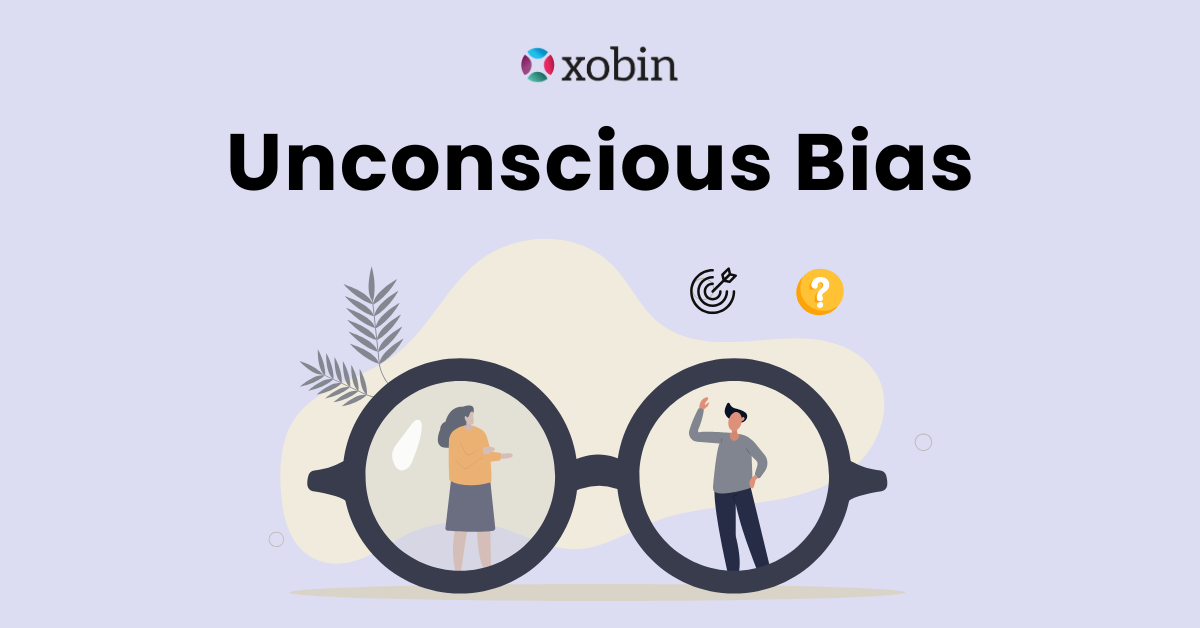
Table of Contents
Unconscious bias describes automatic, unseen assumptions and stereotypes that shape how people perceive, judge, and decide, often without awareness. In hiring and workplace choices, however, these biases silently decide who gets shortlisted, promoted, or ignored, which causes unfair results, lost talent, and weaker diversity, even with well-meaning HR policies in place.
Explore top recruitment tools to reduce hiring bias today!
TL;DR
- Unconscious bias is unintentional and operates outside conscious awareness.
- It directly affects hiring, performance reviews, promotions, and leadership decisions.
- Bias leads to homogeneous teams, reduced innovation, and legal risk.
- Structured pre-employment assessments, structured interviews, skills-based assessments, and data-driven decisions help reduce bias.
- Technology-driven assessments help recruiters hire based on skills, not assumptions.
What Is Unconscious Bias?
Unconscious bias, or implicit bias, describes the attitudes, stereotypes, and assumptions people hold without awareness. These judgments happen automatically. Rather than conscious intent, they arise from mental shortcuts the brain relies on to process information fast.
Yet speed has consequences. Research from Harvard confirms that unconscious bias shapes decisions, even among seasoned professionals who see themselves as objective. In hiring, this often leads to pattern hiring, where recruiters choose candidates who look, speak, or think like current employees. Over time, this behavior reduces workforce diversity, slows innovation, and damages employer brand credibility.
Moreover, unconscious bias goes beyond hiring. It affects performance feedback, learning opportunities, leadership visibility, and succession planning. This turns bias into a hiring problem across the employee lifecycle.
Common Types of Unconscious Bias in the Workplace
Affinity Bias
Affinity bias happens when decision-makers favor candidates who have similar backgrounds, interests, or experiences. For example, a hiring manager may unknowingly prefer someone from the same university or cultural background. However, this feels natural but limits diversity and strengthens exclusion.
Gender Bias
Gender bias leads to assumptions about capability based on gender stereotypes, such as men being better leaders or women being less committed due to caregiving responsibilities. Studies consistently show this bias affects pay equity, promotions, and leadership representation.
Confirmation Bias
Confirmation bias happens when recruiters form an early opinion and then selectively notice information that confirms it. For instance, one weak answer may overshadow strong evidence of skill, or a strong resume may excuse poor interview performance.
Name & Accent Bias
Candidates with “non-traditional” names or accents often face lower callback rates, despite equal qualifications. This bias disproportionately affects global, multicultural, and underrepresented talent pools.
Why Unconscious Bias Is a Serious Business Risk
Unconscious bias isn’t just an ethical issue; it’s a strategic one. Organizations affected by biased decision-making face higher attrition, weaker innovation, and potential compliance risks.
According to McKinsey, companies with diverse teams are up to 35% more likely to outperform peers financially. Bias directly blocks this advantage. Moreover, biased hiring decisions increase mis-hires, which can cost up to 30% of an employee’s annual salary.
Additionally, biased processes erode candidate trust. Today’s workforce expects fairness, transparency, and equity. Organizations perceived as biased struggle with employer branding, especially among Gen Z and global talent markets.
💡 Pro Tip: Bias is most powerful when decisions are unstructured. The more subjective the process, the higher the bias risk.
How Unconscious Bias Affects Hiring & Talent Decisions
Unconscious bias often enters at key decision points: resume screening, interviews, and evaluations. Unstructured interviews are particularly vulnerable, as they rely heavily on personal impressions rather than job-related evidence.
Biased hiring decisions often lead to:
- Reduced diversity and inclusion
- Lower quality of hires
- Limited innovation due to homogeneous teams
- Employer branding issues
- Higher turnover rates
Bias also impacts internal mobility. High-potential employees from underrepresented groups are often overlooked due to biased perceptions of “leadership presence” or “culture fit,” slowing diversity at senior levels.
How Organizations Can Reduce Unconscious Bias
Structured, Skills-Based Hiring
Shifting from resume-based screening to role-specific skill assessments actively cuts bias. As candidates are judged on what they can do instead of who they are, fairness clearly improves.
Standardized Interviews
Using structured interviews with consistent questions and scoring rubrics minimizes subjective judgment and improves predictive accuracy.
Blind Screening
Removing identifying information (name, gender, age) from early screening stages helps level the playing field.
Bias-Aware Technology
Modern HR platforms use AI-driven evaluations, standardized scoring, and audit-ready reports to ensure consistency and fairness across candidates.
Unconscious Bias vs. Conscious Bias
This distinction matters.
- Unconscious bias is automatic and unintentional.
- Conscious bias is deliberate and intentional.
Most hiring challenges stem from the unconscious kind. That’s why awareness alone isn’t enough. Structured systems are needed to minimize its impact.
| Aspect | Unconscious Bias | Conscious Bias |
| Awareness | Unintentional | Intentional |
| Control | Harder to detect | Easier to address |
| Common in Hiring | Very High | Lower |
| Solution | Structured processes & data | Policy enforcement |
This distinction matters because training alone cannot remove unconscious bias; systems and structures address it.
How Can Recruiters Identify Unconscious Bias?
Spotting bias is tricky because it hides in plain sight. Still, there are warning signs recruiters should watch for:
- Relying heavily on “gut feeling”
- Making snap judgments early in interviews
- Overvaluing pedigree over skills
- Inconsistent interview questions
When hiring decisions feel subjective, bias in hiring decisions is often at play.
Why Addressing Unconscious Bias Is a Business Priority
This isn’t merely an HR concern; it’s a leadership responsibility. Organizations that proactively address unconscious bias:
- Build inclusive cultures
- Improve decision quality
- Enhance employer brand credibility
- Attract top talent across demographics
At Xobin, we help organizations move from gut-based decisions to skills-based hiring. Our scientifically designed assessments ensure every candidate is evaluated objectively, consistently, and fairly.
If you’re serious about reducing bias, improving hiring quality, and building diverse teams, it’s time to rethink how you assess talent. Book a personalized demo with Xobin today and experience bias-free, skill-first hiring in action.
FAQs
1. Is unconscious bias the same as discrimination?
No. Unconscious bias is unintentional, while discrimination is deliberate. However, both can lead to unfair outcomes and legal risk.
2. Can unconscious bias be completely eliminated?
Not entirely. Bias is part of human cognition, but its impact can be significantly reduced through structured, objective processes.
3. How does unconscious bias affect diversity hiring?
It limits representation by favoring familiar profiles, reducing access to diverse and high-potential talent.
4. Are experienced recruiters immune to unconscious bias?
No. Studies show bias affects all decision-makers, regardless of experience or intent.
5. What is the most effective way to reduce unconscious bias in hiring?
Skills-based assessments, structured interviews, and data-driven evaluations are the most reliable methods.
Recommended Content

Video Interviews can simplify your hiring
Don’t let a packed schedule be a hindrance in recruitment. Use structured interviews with the power of video to screen applicants. Understand the communication skills, motivation, and job skills using video interviews.
Pre-employment Testing: The Complete Guide
Move over from pen-paper based tests and manually checked assignments to pre-employment assessments. Democratize your organization hiring by screening for skills before you interview.
How can Employers adapt to Remote Hiring
With most jobs going remote, your best applicants could be in Melbourne or Miami. From remote screening and virtual interviews to remote onboarding, Learn the best practices to get started.