
Mental Health at Work Is Not a Tick-Box Exercise | Teju Nageswari
86% of Indian employees are struggling with mental health. nSmiles founder Teju Nageswari on what real well being looks like once you take away the yoga day posters.
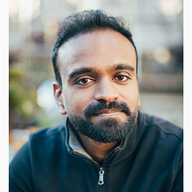
Guruprakash Sivabalan
Speakers

Most companies know they should care about mental health. Far fewer know what that actually means in practice.
They run a yoga session on World Mental Health Day. They share a helpline number in a company-wide email. They add a counseling benefit to their insurance package that fewer than 2% of employees ever use. And they call it done.
Teju Nageswari, founder and CEO of nSmiles, calls this what it is: a tick-box exercise. And in this episode #3 of Xobin Talks, she explains why it fails, what real workplace well-being looks like, and why the companies that get this right are not doing it for altruistic reasons, they are doing it because the data is overwhelming.
This episode was recorded on World Mental Health Day, October 10, and hosted by Guruprakash Sivabalan, Founder and CEO of Xobin. The theme for World Mental Health Day, declared by the World Federation for Mental Health, was "Make Mental Health and Well-Being for All a Global Priority." Recorded on World Mental Health Day 2022, this conversation is more relevant even today than it was when it aired.
What we cover
- Why Is Mental Health a Global Priority Right Now?
- How Does Poor Mental Health Actually Affect a Company's Business Performance?
- What Does a Real Workplace Mental Health Policy Actually Look Like?
- How Do Unaddressed Stressors Actually Show Up in the Hiring and Assessment Process?
- What Are the Five Self-Care Practices That Protect Mental Health at Work?
Why Is Mental Health a Global Priority Right Now?
Wellbeing is not the absence of illness. It is the ability to function at an optimal level in mind, body, and organizations that only address mental health when it becomes a crisis are managing the wrong end of the problem. India had the highest rate of burnout symptoms globally at 59%, significantly above the global average of 20%, in a McKinsey Health Institute survey of 30,000 employees across 30 countries (McKinsey Health Institute, 2023). That number has not improved.
Teju anchors the World Mental Health Day theme directly to this reality. The theme, "Make Mental Health and Well-Being for All a Global Priority," was not about clinical illness. It was about the recognition that mental health policies in most organizations are built for the 2% of employees dealing with diagnosed conditions and silently ignore the other 98% who are navigating stress, uncertainty, relationship pressure, financial anxiety and performance demands every single day.
The pandemic changed this. When the double burden of managing work and home collapsed into the same physical space, combined with health fears, financial instability and job uncertainty, mental health challenges stopped being a minority problem. They became the majority experience. Most organizations had not designed for that.
Teju's argument is straightforward. Well-being exists on a continuum. At one end is optimal functioning. At the other is clinical illness. Most of your employees are somewhere in the middle, and unmanaged stress quietly moves people down that continuum toward anxiety, depression and burnout without anyone noticing until it is already expensive.
Teju's framing of well-being as a continuum, not a binary, resets how organizations should design their mental health strategy. Instead of asking, "Do we have a helpline?" The right question is "Where are our employees on the continuum, and what do they need at each point?
How Does Poor Mental Health Actually Affect a Company's Business Performance?
The business case for workplace mental health is no longer a philosophical argument. It is a financial one. Poor mental health costs Indian employers approximately $14 billion annually through absenteeism, presenteeism and attrition (Deloitte India, cited by CSIS). Work stress alone leads to a 21% increase in absenteeism and a 35% drop in productivity (Deloitte India, 2022).
Teju works through the business impact across multiple dimensions that most HR conversations skip.
Decision-making quality falls first. A person carrying financial anxiety, relationship stress or unresolved personal challenges into a workday is not making decisions at their full capacity. They are managing two parallel mental loads at once, the one on their screen and the one in their head. The quality, speed, and clarity of their decisions deteriorate in ways that are invisible on a performance dashboard but very visible in business outcomes over time.
Collaboration degrades next. When stress levels are high and coping resources are low, interpersonal tolerance shrinks. Team members become less generous with each other. Feedback is received as criticism. Disagreements escalate faster than they should. The friction cost of this is significant and almost never attributed to its actual cause.
Presenteeism is the most expensive and least tracked problem. An employee who is physically at their desk but mentally unavailable is, in practice, not working. They are occupying a slot in your headcount and consuming a salary while delivering a fraction of their potential output. Teju is direct about this: most organizations have no measure for presenteeism, and so they do not know how much of their productivity loss is happening right in front of them.
The retention equation is stark. Companies with structured well-being programs see 25% lower attrition and 32% higher engagement (AceNgage, 2025). Given that replacing one employee costs anywhere from six months to two years of their salary, the math on well-being investment is not complicated.
What Does a Real Workplace Mental Health Policy Actually Look Like?
A real well-being policy is not a single program. It is a set of interventions designed for the full continuum of employee needs, from a new joiner to someone managing a chronic condition. Only 33% of Indian organizations currently have formal mental health policies in place, despite 86% of their employees struggling with mental health issues (CII-MediBuddy, 2025). The gap between problem awareness and policy response is enormous.
Teju is specific about what most current programs get wrong.
The engagement rate on traditional Employee Assistance Programs (EAPs) in India runs below 2%. The reason is not that employees do not need help. It is that the combination of stigma, fear of HR becoming aware, and the impersonal nature of the offering keeps the vast majority away. A helpline that nobody uses is not a mental health program. It is a liability shield.
What actually works looks different at every stage of an employee's journey. A fresher's needs center on belonging, anxiety about performance, and adjusting to workplace culture. A mid-career professional's pressures involve career stagnation, family obligations and financial stress. A senior employee may be navigating health conditions or leadership loneliness. A single policy cannot address all three, and most do not attempt to.
Teju's prescription has several specific components. Fear-free spaces matter enormously. Employees must believe that speaking to a manager about a mental health challenge, a difficult pregnancy, a chronic illness, a period of grief, will not put their job at risk. That safety is not created by a policy document. It is created by manager behavior, and it requires deliberate investment in manager training on empathy and psychological safety.
Budgets reflect priorities. The current state of well-being budgets in most Indian organizations reflects how seriously leadership takes the issue: not very. Teju makes the point plainly to CHROs: a Rs 90,000 annual program for a 10,000-person organization is not a mental health program. It is a gesture. The organizations that are making real progress have moved toward need-based, personalized, multi-level interventions that are sized to the actual problem.
How Do Unaddressed Stressors Actually Show Up in the Hiring and Assessment Process?
Anxiety and unresolved mental health challenges do not stay outside the interview room. They follow candidates in, and they affect performance in ways that skills tests alone cannot detect. 42% of Indian corporate employees report symptoms of anxiety or depression, and nearly half attribute their mental health challenges directly to workplace stress (Mpower Minds, 2023).
Our founder, Guruprakash, raises something that Xobin encounters directly as a talent assessment platform. A candidate can score exceptionally well on a skill test in isolation. Put that same candidate in a live problem-solving session with 10 to 15 people watching and a real deadline, and the performance can collapse entirely. The knowledge is there. The anxiety overrides access to it.
Teju explains why this happens physiologically. Once anxiety reaches a moderate level, the brain's threat-detection system activates. Fight-or-flight responses rise. Concentration narrows. The cognitive bandwidth available for complex problem-solving reduces dramatically. What looks like a skills gap is often an anxiety response to high-stakes visibility and a person managing chronic stress at a four or five on a ten-point anxiety scale will experience routine workplace challenges as outsized threats.
The practical implication for HR and hiring managers: performance data from assessments tells you what someone can do under controlled conditions. It does not tell you what support they need to sustain that performance in a real work environment. Structured, consistent formats such as AI interviews can lower the situational pressure of a panel setting, but organizations that also invest in manager capability to recognize and respond to early stress signals get better performance outcomes from the same talent than those that only focus on assessment at the entry point.
What Are the Five Self-Care Practices That Protect Mental Health at Work?
Self-care is not a weekend activity. It is a daily discipline and the five practices Teju identifies are accessible to anyone, regardless of whether their employer has a formal wellbeing program. Research consistently shows that regular physical activity, mindfulness practice and strong social connection are among the most evidence-backed protective factors for mental health across all populations.
Teju breaks these down practically, without jargon.
1. Physical activity
Thirty minutes of physical movement every single day. Not intense training. Movement. This is the single most evidence-supported intervention for managing stress and maintaining emotional resilience.
2. Emotional awareness
Knowing how you are feeling before deciding how to respond. This means developing an emotional vocabulary, learning to name anxiety, frustration, sadness and overwhelm accurately rather than labeling everything generically as "stressed." Awareness is the prerequisite for every other coping skill.
3. Healthy coping strategies
When stress arrives, the instinct for most people is a negative coping strategy: smoking, drinking alcohol, overworking, avoidance, gossiping, or window shopping as emotional numbing. These provide temporary relief and compound the underlying problem. Teju's recommendation is not to judge these instincts but to build healthier alternatives into daily habits, even one. Talking to a trusted person, a short walk, or a brief mindfulness practice. The strategy matters less than the consistency.
4. Continued learning
Learning something new every single day, even one small thing, keeps the brain active and creates a sense of forward momentum. Teju frames this through the lens of compounding: small daily inputs into knowledge accumulate into significant capability over time. That trajectory itself is a mental health protective factor.
5. Genuine connection
At least one person at work you can be honest with. Not performing wellness. Actually sharing what is happening. Workplace isolation is one of the strongest predictors of burnout. Deliberate connection, which is a real conversation, not a ping, is one of the most undervalued tools available to every employee regardless of their organization's policy landscape.
When Should Someone Seek Professional Help for Mental Health?
The signal is a change in daily functioning, not a crisis event. When your day-to-day ability to work, sleep, connect and engage starts to deteriorate in ways that persist beyond a difficult week, that is when professional support becomes appropriate. Seeking help is not an admission of failure. It is an act of self-awareness and the earlier it happens, the easier the recovery.
Teju gives a specific list of signals to watch for in yourself or your team members.
Loss of interest in things that previously gave pleasure. Difficulty concentrating that feels qualitatively different from normal tiredness. Disproportionate physical responses, heart racing, difficulty breathing, to ordinary uncertainty or feedback. Persistent pessimistic thoughts about people or situations. Repetitive rumination: "Why me? Why this? Why now?" loops that do not resolve.
The practical pathway Teju recommends follows a sequence that most people can follow without immediately needing professional intervention. Start with self-care: the five practices above. If those are not enough, move to trusted relationships, people in your life who have some understanding of mental health and can offer real perspective rather than dismissal. If that is still not sufficient, access whatever counseling support your employer provides. If stigma is blocking that, the next step is seeking an independent counselor outside the workplace context.
The most important message, directed at employees who are hesitant to seek help: the only thing that delays recovery is waiting. Mental health challenges do not resolve on their own if the underlying stressors persist. They compound. The earlier the intervention, the shorter the path back.
What Does nSmiles Build and How Can Organizations Use It?
nSmiles offers two distinct products for organizations looking to move beyond tick-box wellness. For HR teams navigating the gap between recognition of the problem and meaningful response, Teju describes two specific offerings that address different parts of the well-being challenge.
The first is a Happiness Index, a statistically validated assessment across seven areas of holistic well-being, designed to measure where an organization's employees actually are on the well-being continuum. This drills down by level: senior managers, middle managers and new joiners are assessed separately because their needs and stressors are genuinely different. The output is not a score on a poster. It is a set of strategic options for CHROs on what kinds of interventions to design for which population segments.
The second is an app-based self-help platform called My Happy Being on the Google Play Store and iOS Store, designed for Indian adult employees. It covers six dimensions of well-being: self, family, money, career, mental health and physical health including support for chronic conditions like fibromyalgia, sleep difficulties and body image challenges. The program runs on a 50-day morning and evening track format that employees can use independently, without requiring HR involvement or formal disclosure of their situation.
For students and young people aged 13 to 19, nSmiles offers the Student Success App, which focuses on building social-emotional skills: time management, overcoming subject-specific fear, motivation, digital addiction and managing anxiety and low mood. nSmiles received a UNICEF award for the highest rate of statistical validation produced by a well-being platform in India.
Guruprakash Sivabalan · Founder & CEO, Xobin
Guru Prakash Sivabalan is Founder and CEO of Xobin, an AI-powered recruitment, talent assessment and talent management platform used by 5000+ companies across 60+ countries. With a decade of experience in HR and talent management, he focuses on helping companies replace instinct-based hiring with evidence-based decisions.
Have a hiring story worth sharing?
Frequently asked questions
- Why is workplace mental health called a business priority and not just an HR initiative?
- Poor mental health costs Indian employers $14 billion annually through absenteeism, presenteeism and attrition. For every Re 1 invested in mental health programs, companies see Rs 3-4 in returns. It is a financial issue as much as a human one.
- What is the difference between mental health and well-being?
- Mental health refers to the absence or presence of clinical illness. Well-being is broader: the ability to function optimally at the mind and body level. Most employees are not clinically ill but are not functioning at their full potential either. That gap is where organizations should focus.
- Why do most workplace mental health programs fail to engage employees?
- Traditional EAPs in India see engagement rates below 2%. The primary barriers are stigma, fear that HR will find out, and impersonal delivery. Programs that feel like a checkbox rather than genuine support are correctly identified as such by employees.
- What are the five self-care practices for mental health at work?
- Daily physical activity (30 minutes), emotional awareness (naming how you feel), healthy coping strategies instead of avoidance or numbing, continued learning every day, and at least one genuine connection at work. These are accessible to every employee regardless of company policy.
- When should someone seek professional mental health help?
- When day-to-day functioning starts to deteriorate persistently: loss of interest, difficulty concentrating, disproportionate stress responses, or recurring rumination. Start with trusted friends, then access employer counseling if available. The earlier the intervention, the shorter the recovery.
- What does a real workplace mental health policy include?
- Multi-level interventions for different employee populations, not one program for everyone. Fear-free spaces where employees can discuss personal challenges without career risk. Manager training in empathy and early signal recognition. Budgets that reflect the scale of the problem, not just a gesture toward it.
- How does unaddressed mental health affect performance in assessments and interviews?
- Anxiety activates the brain's threat-detection system, reducing cognitive bandwidth for complex problem-solving. A candidate who performs well in isolation may underperform in a high-visibility live setting. What looks like a skills gap is often an anxiety response to stress.
- What does nSmiles offer for organizations and employees?
- Two products: a Happiness Index that assesses employee well-being across seven dimensions with strategic recommendations for CHROs and the My Happy Being app for employees to self-manage well-being across six life areas. Both are statistically validated. A separate Student Success App serves students aged 13-19.
More from the Xobin hub
- Xobin TalksExecutive Fit Is Situational Not Universal | Rajesh SwaminathanGreat leaders fail in the wrong context. Rajesh Swaminathan on assessing judgment over track record and where AI genuinely helps executive search.
- Xobin TalksWhat Most Companies Get Wrong About Their HR Tech Stack | Phil StrazzullaMost HR tech stacks are built for a company you are not. Phil Strazzulla on evaluating tools honestly and getting more from the ones you already pay for.
- Xobin TalksFix the Manager First. The Culture Will Follow | Chetan SwaroopPolicy never fixed a culture. Chetan Swaroop on what breaks past 100 employees and how to move a family run business toward merit without a revolt.
- CompareSearching for a Criteria Corp Alternative? See How Xobin ComparesFind out whether Xobin or Criteria Corp is the better assessment partner for your team with our side-by-side expert comparison.
- CompareBest HackerEarth Alternative for Hiring Beyond Developers: XobinChoosing between Xobin and HackerEarth? Read our expert comparison to see which platform fits both your technical and non-technical hiring.
- CompareXobin vs HackerRank: Which Platform Should You Choose in 2026?Learn how Xobin and HackerRank stack up on coding tests, question libraries and interviews, and decide which suits your hiring goals.