

Online assessments are only as reliable as the system watching over them. A 2024 survey by the International Test Commission found that 86% of organizations running online hiring tests experienced at least one suspected case of candidate impersonation or proxy test-taking. That number has only climbed with remote hiring becoming the norm.
Table of Contents
If your company is running pre-employment tests without strong proctoring, you’re not assessing candidates. You’re trusting strangers.
Xobin’s AI proctoring layer was built specifically to close this gap. It doesn’t rely on a single detection method. It stacks multiple real-time signals to catch fraud before it affects your hiring decision. If you want the full picture of what the system covers, the advanced AI proctoring overview is a good starting point. This post focuses specifically on identity and fraud detection.
TL;DR – Key Takeaways
- Xobin uses multi-layered AI proctoring that simultaneously monitors faces, devices, eye movements, audio, and browser behavior.
- The platform detects identity fraud, including face swapping, proxy test-takers, and unauthorized devices using computer vision in real time.
- Every flagged event is timestamped and included in an audit-ready proctoring report with a trust score.
- Xobin’s proctoring works across 60+ countries without requiring a separate app installation for most features.
Why Single-Layer Proctoring Fails
Most basic proctoring tools focus on just one function: recording the webcam. However, that’s all they do, and candidates are well aware of it. Since recording is passive, it does not intervene or flag suspicious behavior in real time.
As a result, a smart test-taker can easily bypass these systems. For instance, they may use a second phone below the camera frame. Similarly, someone else could stand nearby but remain out of view. In addition, they might keep a reference document open in another tab that the webcam cannot detect.
If you haven’t read about how proxy test-takers operate in online hiring, the scale of the problem is likely bigger than you think.
This is why Xobin’s approach is fundamentally different. Rather than monitoring one channel and hoping for the best, the platform cross-references multiple behavioral and environmental signals simultaneously. Each layer catches something the others might miss. Together, they create an environment where cheating becomes genuinely difficult to execute.
Our complete guide to cheating in online assessments covers why the methods keep evolving and why a single detection layer will always fall short.
How Xobin Detects Multiple Faces in the Frame
This is one of the most common forms of proxy cheating: having another person sit next to or behind the test-taker, off-camera, whispering answers. In some cases, a second person may briefly appear in the frame.
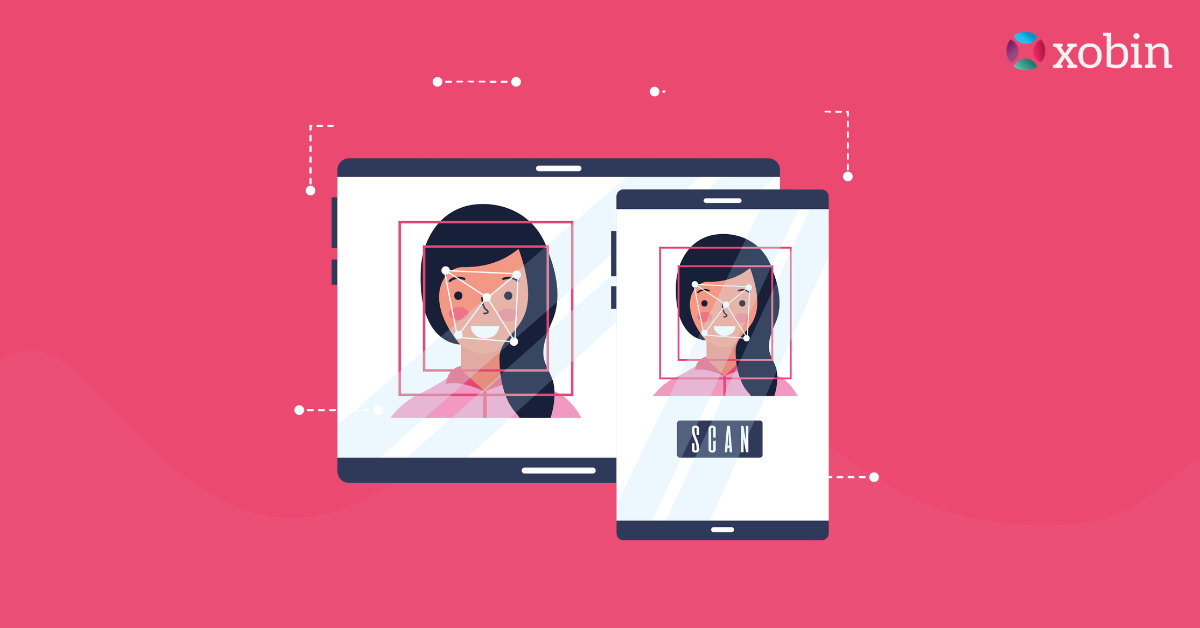
Xobin’s Multiple User Detection uses AI-powered computer vision to analyze the live webcam feed throughout the assessment. The system doesn’t just examine at the start. It continuously scans for the presence of additional faces appearing within the camera’s field of view during the exam.
When a second face is detected, the system:
- Logs a timestamped flag with a screenshot
- Issues a real-time warning to the candidate
- Records the event in the proctoring report with severity scoring
This happens within seconds of detection, not after the test is submitted. That matters because intervention during the test is far more valuable than discovering fraud after the hire is made.
According to a 2024 SHRM report, organizations that implemented real-time proctoring interventions reduced post-hire performance discrepancies by 34% compared to those using passive recording only (SHRM, 2024). Early detection changes outcomes.
For teams also running video-based screening, Xobin’s automated video interview platform applies the same proctoring layer to one-way video responses, so integrity is maintained at every stage of the funnel, not just during tests. This also connects directly to how Xobin’s AI proctoring detects and prevents every assessment cheating method, not just the most obvious ones.
How Device Detection Works: Catching Hidden Smartphones and Tablets
A candidate sitting alone, facing the camera, can still be cheating. They might have a smartphone propped up just outside the camera’s visible frame. Or a tablet showing a document. This is one of the hardest behaviors to catch, and most platforms don’t even try.
Xobin’s Unauthorized Device Detection uses object recognition algorithms trained on consumer electronic device shapes to scan the live video feed. The model identifies smartphones, tablets, secondary screens, and printed materials that appear within the webcam’s field of view during the test.
It doesn’t rely on the candidate disclosing what’s on their desk. The AI looks for it.
When a device is detected:
- The system flags the visual object with confidence scoring.
- A screenshot is captured and stored.
- The candidate’s trust score is adjusted accordingly.
- The flag appears in the final proctoring report with supporting evidence.
This layer specifically addresses one of the biggest gaps in traditional remote proctoring: the space just outside what the candidate wants you to see.
EyeGazer: The Feature That Watches Where Candidates Look
Here’s something most people don’t know: you can tell a lot about whether someone is reading an external document just by tracking their eyes. If a candidate is frequently looking away from the screen at a fixed angle, they’re probably reading something the camera can’t see.
Xobin’s EyeGazer uses facial tracking and gaze detection to monitor where the candidate is looking throughout the test. It runs on the candidate’s webcam feed and uses AI to establish a baseline gaze zone during the early minutes of the assessment.
If the candidate’s gaze deviates from the screen beyond a configured threshold, repeatedly and in patterns inconsistent with normal test-taking behavior, the system flags it. It’s not about a single glance. It’s about patterns.
This feature is especially valuable for high-stakes assessments where reference material is a major concern. Think of certification exams, senior leadership hires, or any role where domain knowledge is non-negotiable. If you’re running pre-employment skill assessments for such roles, EyeGazer adds a critical verification layer that written scores alone can’t provide.
Browser Activity Monitoring: The Silent Audit Trail
Identity fraud doesn’t always look like a second person in the room. Sometimes it’s a candidate who has a reference guide open in another browser tab. Or they’ve copied the question to paste into ChatGPT.
If you’re wondering whether ChatGPT can pass your hiring assessment or not? The answer may surprise you, and it’s exactly why tab-switch monitoring matters.
Xobin also has a dedicated detection layer for identifying AI-generated answers in assessments that works alongside browser monitoring. Or they’re using keyboard shortcuts to open dev tools.
Our Browser Activity Monitoring uses JavaScript-based surveillance and browser APIs to detect and record every action taken outside the test window. This includes tab switching, copy-paste attempts, keyboard shortcuts, and attempts to open restricted content.
Every violation is:
- Logged with a precise timestamp
- Included in the candidate’s proctoring report
- Weighted in the trust score calculation
This layer is important because it creates accountability without being invasive. Candidates are warned upfront that browser activity is monitored. The system works as a deterrent before it works as a detection tool.
Audio Analysis: Catching What the Camera Can’t See
What if someone is whispering answers to a candidate from the next room? The webcam won’t show that. But the microphone will pick it up.
Xobin’s audio analysis runs real-time monitoring of ambient sounds during the assessment. The AI model listens for patterns consistent with conversations, background voices, or coached responses. Unusual audio activity triggers a flag in the proctoring log.
This doesn’t mean normal background noise causes a problem. The system is trained to distinguish between ambient noise and structured conversation. It’s not perfect, but combined with other signals, it adds a meaningful signal to the fraud detection stack.
Research from the Talent Board’s 2024 Candidate Experience Report found that candidates who knew they were being proctored via audio reported 23% higher rates of self-regulation during tests. Awareness of monitoring changes behavior (Talent Board, 2024).
Teams evaluating the broader landscape of assessment integrity tools may also find our roundup of the best AI interview tools for hiring teams useful, covering how audio and video monitoring stacks compare across platforms.
The Proctoring Report: From Detection to Decision
Detection without documentation is useless. Xobin compiles all flagged events into a structured proctoring report that accompanies each candidate’s scorecard.
The report includes:
- A trust score calculated from the frequency, severity, and combination of flagged behaviors
- Timestamped screenshots for every visual flag
- An audit trail of browser events with timestamps
- Audio anomaly markers with time references
- A summary view for quick recruiter review
This means hiring managers don’t need to watch hours of recordings. They get a structured view of where risk is high and can drill into specific events if needed.
The audit trail also matters for compliance. In regulated industries like banking, healthcare, and government hiring, being able to prove assessment integrity is not optional.
Xobin’s data security and compliance certifications, including SOC2 Type-2, ISO 27001, and GDPR, mean the proctoring data itself meets the same standard as the hiring decision it supports.
Stop Assessment Cheating Before It Starts with Xobin!
Relying only on trust in hiring is a risk no organization can afford to take. Especially in remote assessments, the chances of identity fraud, proxy test-taking, and unauthorized help increase significantly. Therefore, recruiters must stay alert to these challenges.
Moreover, the real concern is not whether such issues occur, they certainly do. Instead, the focus should be on how effectively your proctoring system can detect and prevent them. Therefore, a strong and reliable proctoring solution makes all the difference in ensuring fair and secure hiring.
Xobin’s multi-layered AI proctoring approach combines face detection, device recognition, gaze tracking, browser monitoring, and audio analysis into a single integrated system. Each layer catches something different. Together, they create assessment conditions where fraud is genuinely hard to pull off and even harder to hide.
If you’re still unsure whether to build this capability in-house or choose a platform, then this breakdown on why companies prefer buying talent assessment software instead of developing it is worth exploring before you decide.
Moreover, if you conduct online assessments without this level of coverage, you end up making hiring decisions based on incomplete information.
Ready to see how Xobin’s AI proctoring works in a live demo? Get started today and we’ll walk you through every detection layer with a real candidate test environment.
Frequently Asked Questions
Does Xobin’s AI proctoring require candidates to install software?
Most of Xobin’s proctoring features run via the browser and require no separate installation. The lockdown browser mode, which provides a more restricted environment, may require a lightweight extension. This keeps friction low for candidates while maintaining strong detection coverage.
Can candidates appeal a proctoring flag?
Yes. The proctoring report is designed to support human review. A flag is an indicator, not an automatic disqualification. Recruiters and hiring managers retain final decision authority. Timestamped evidence gives them the context to review each flag individually.
How does Xobin handle proctoring data privacy?
Xobin is compliant with GDPR, SOC2 Type-1 and Type-2, and ISO 27001. Proctoring data is stored in region-specific data centers across India, the USA, the UK, Europe, and the Middle East. Candidate consent is obtained before proctoring begins, and data retention policies align with regional regulatory requirements. You can review Xobin’s full GDPR readiness documentation for a detailed breakdown of how candidate data is handled.
Does the proctoring work for large-scale hiring events?
Yes. Xobin’s infrastructure supports 1,000+ concurrent proctored sessions. This makes it well suited for campus recruitment drives, hackathons, and enterprise hiring sprints where volume and speed matter.
What happens if a candidate’s internet connection drops during a proctored test?
Xobin’s platform is built to handle intermittent connectivity. Tests are auto-saved, and the proctoring session resumes when connectivity is restored. Connection drops are logged but are not treated as fraud indicators on their own.