

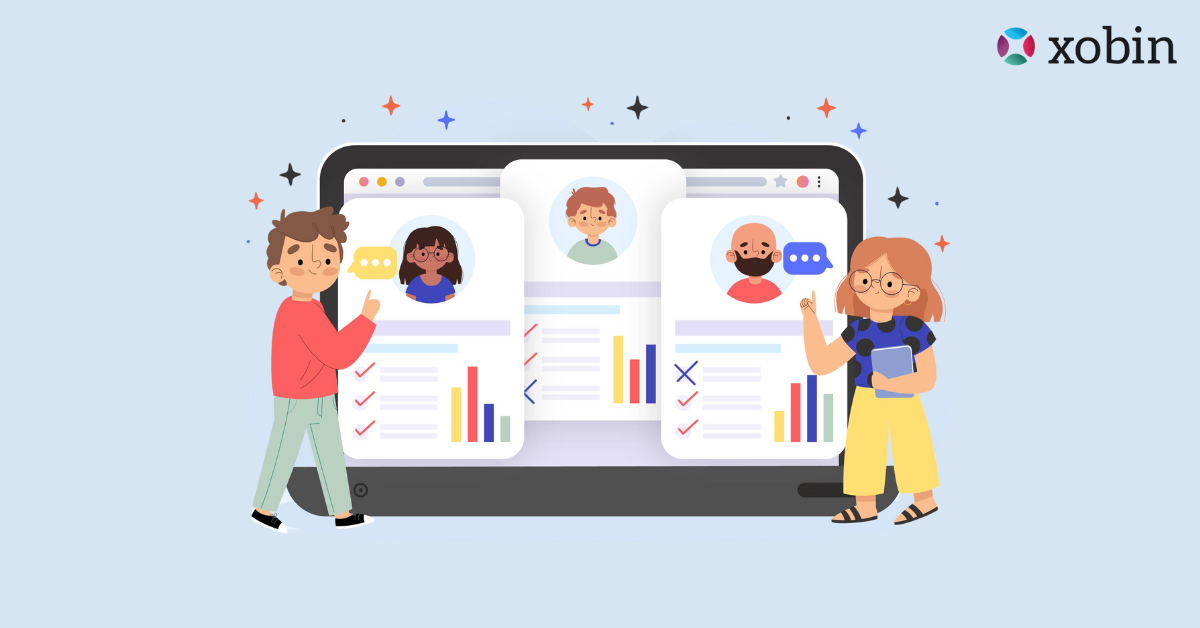
Hiring today is no longer about gut instinct or resumes alone. With increasing pressure to hire faster, fairer, and more accurately, organizations are turning to talent evaluation software to make smarter people decisions. From screening thousands of applicants to identifying future leaders internally, these platforms go far beyond simple testing tools. In this blog, we break down real-world use cases of talent assessment software, showing how modern organizations apply it across hiring, internal mobility, and workforce planning to drive measurable business outcomes.
Table of Contents
TL;DR
- Talent assessment software use cases involve hiring, promotions, L&D, and workforce planning.
- It enables skills-first recruitment, reduces bias, and improves quality of hire.
- Talent assessment Software can be used in case of pre-employment screening, campus hiring, leadership assessment, and internal evaluations.
- Enterprises use online assessments to scale globally while maintaining consistency and compliance.
- Modern talent assessment platforms like Xobin combine AI, analytics, and proctoring for decision-ready insights.
Understanding Talent Assessment Software
Talent assessment software is an online platform that evaluates candidates’ or employees’ skills, cognitive ability, behavior, and job fit using structured tests and analytics. Unlike traditional interviews or resume screening, it provides objective, data-backed insights into whether a person can actually perform in a role.
According to Gartner, organizations using structured assessments are significantly more likely to improve hiring accuracy and reduce early attrition. That’s why assessments are no longer limited to hiring; they’re now embedded across the entire talent lifecycle.
Real-World Use Cases of Talent Assessment Software
1. Pre-Employment Screening & Shortlisting
One of the most common use cases of talent assessment software is pre-employment skills testing. Instead of manually reviewing hundreds or thousands of resumes, recruiters use assessments to filter candidates based on actual skills and aptitude.
These assessments may include aptitude tests, role-specific skill tests, coding challenges, or situational judgment tests. The goal is simple: shortlist candidates who can perform the job, not just talk about it. This approach is especially valuable in high-volume hiring, where manual screening is slow, inconsistent, and prone to bias.
From a business perspective, this dramatically reduces time-to-hire and recruiter workload. Studies indicate that poor hiring decisions can cost up to 30% of an employee’s annual salary. Skill-based screening helps avoid that risk early in the funnel. (Source: SHRM)
💡 Pro Tip: Use assessments before interviews, not after. Early screening saves leadership time and improves interview quality.
2. Skills-Based Hiring (Beyond Resumes & Degrees)
Traditional hiring relies heavily on degrees, job titles, and brand-name employers. However, modern organizations are shifting toward skills-based hiring, where capability matters more than credentials.
Talent assessment software enables this shift by objectively measuring job-relevant skills such as technical, functional, or cognitive. For example, a software engineer can be evaluated on actual coding performance, while a sales candidate can be assessed on communication, persuasion, and problem-solving.
This use case is particularly important for organizations focused on diversity, equity, and inclusion. By standardizing evaluation criteria, assessments reduce unconscious bias and create a more level playing field. Research from McKinsey & Company consistently shows that diverse teams outperform less diverse ones; skills-first hiring makes that achievable.
Want to move from resume-based hiring to skills-first decisions? Assessment-led hiring makes it practical.
Book A Demo3. Campus Hiring & Early Career Recruitment
Campus recruitment brings distinct challenges, such as limited work experience, high applicant volumes, and strict timelines. Therefore, talent assessment software plays a truly indispensable role here.
Organizations use aptitude tests, cognitive ability assessments, and basic skill evaluations to identify high-potential graduates. Since resumes offer little differentiation at this stage, assessments provide a fair and scalable way to compare candidates across colleges, regions, and backgrounds.
Additionally, online proctoring ensures test integrity even when assessments are conducted remotely. This allows companies to expand campus hiring beyond top-tier institutions and tap into wider talent pools without compromising standards.
For leadership teams, this use case supports long-term workforce planning. Identifying strong early-career talent reduces future leadership gaps and builds a sustainable talent pipeline.
4. Technical & Role-Specific Skill Validation
In technical and specialized roles, interviews alone are insufficient. This is why talent assessment software is widely used to validate role-specific skills like coding, finance, data analysis, operations, or customer support.
For example:
- Developers, meanwhile, undergo real-world coding simulations for assessment.
- Finance professionals face tests on numerical reasoning and domain knowledge.
- Customer-facing roles undergo communication and scenario-handling assessment processes.
Technical assessments simulate job conditions, offering predictive insight into on-the-job performance. According to industrial-organizational psychology research, work-sample tests are among the strongest predictors of job success.
From a strategic lens, this use case minimizes costly mis-hires and protects team productivity, especially in roles where poor performance has an immediate business impact.
5. Leadership Hiring & Succession Planning
Another powerful use case of talent assessment software is leadership evaluation. Hiring or promoting leaders based solely on tenure or past titles is risky. Leadership roles demand specific behavioral traits such as decision-making, adaptability, emotional intelligence, and strategic thinking.
Organizations use psychometric and behavioral assessments to evaluate leadership potential objectively. These tools help answer critical questions:
- Can this individual handle ambiguity?
- Do they align with organizational values?
- Are they prepared to lead at the next level?
For boards and CHROs, this use case is vital for succession planning. It reduces dependency on subjective opinions and provides documented, defensible decisions, which is especially important in regulated or publicly listed organizations.
💡 Pro Tip: Use the same leadership assessment framework for both external hires and internal promotions to ensure consistency.
6. Internal Employee Evaluation & Upskilling
Talent assessment software is not just for hiring; it’s increasingly used for internal evaluations. Organizations assess existing employees to identify skill gaps, promotion readiness, and training needs.
For example, before launching a digital transformation initiative, companies assess employees’ digital, analytical, or leadership skills. The results inform targeted learning and development programs rather than generic training.
This use case directly connects talent strategy with business outcomes. According to LinkedIn Workplace Learning data, organizations that align assessments with L&D see higher employee engagement and retention.
From an executive standpoint, internal assessments maximize ROI on existing talent and reduce over-reliance on external hiring.
7. Global & High-Volume Hiring at Scale
For enterprises hiring across geographies, maintaining consistency is a challenge. Talent assessment software standardizes evaluation criteria across locations, roles, and languages.
Whether hiring 50 or 5,000 candidates, assessments help teams evaluate everyone against clear, consistent benchmarks. Meanwhile, AI-based proctoring, analytics dashboards, and automated scoring simplify large-scale hiring, making it manageable and audit-ready.
This use case is especially critical for organizations operating in regulated industries or multiple countries, where compliance and fairness are non-negotiable.
Try the Best Talent Assessment Software – Xobin!
So, what can talent assessment tools be used for? The answer is simple: wherever people’s decisions matter. From hiring the right candidate to developing future leaders, assessments provide clarity, consistency, and confidence.
Xobin enables all these use cases on a single, AI-powered Talent Intelligence platform. From pre-employment testing and coding simulations to psychometric assessments and internal employee evaluations, Xobin supports the entire talent lifecycle.
With features like AI-based evaluation, advanced proctoring, actionable reports, and global scalability, Xobin helps organizations move from intuition-driven decisions to evidence-based talent strategies without increasing complexity for recruiters or hiring managers.
If you’re looking for the best Talent Intelligence System to hire smarter, reduce risk, and unlock the full potential of your workforce, it’s time to rethink how you assess talent. Book a personalized demo with Xobin today and see how assessment-led decisions transform outcomes.
FAQs
1. Is talent assessment software only for hiring?
No. It’s also used for promotions, internal mobility, leadership development, and training needs analysis.
2. Does talent assessment software reduce hiring bias?
Yes. Structured, standardized assessments significantly reduce unconscious bias compared to resume screening or unstructured interviews.
3. Can small companies use talent assessment software?
Absolutely. Many platforms are scalable and cost-effective for startups and SMBs.
4. What types of assessments are most predictive of performance?
Work-sample tests, cognitive ability tests, and structured behavioral assessments are among the strongest predictors.
5. How does assessment data help leadership teams?
It enables data-backed decisions, improves workforce planning, and reduces the risk of costly mis-hires.