


Hiring teams rarely lose candidates because of salary alone; they lose them because the process feels slow, opaque, and one-sided. In a talent market where candidates have options, outdated recruitment methods quietly damage your employer brand. So what does hiring look like when candidates are treated as stakeholders, not transactions? This blog unpacks candidate-centric recruitment and shows exactly how to apply it to hire better, faster, and smarter.
Table of Contents
TL;DR – Key Takeaways!
- Candidate-centric recruitment puts candidate experience at the core of hiring decisions and processes.
- It improves the employer brand, offers acceptance rates, and long-term retention.
- Key pillars include transparency, fairness, personalization, speed, and respect for candidate time.
- Technology and skills-based assessments play a crucial role in scaling candidate-centric hiring.
- Organizations that adopt this approach outperform peers in quality-of-hire and candidate satisfaction.
What Is Candidate-Centric Recruitment?
Candidate-centric recruiting is a hiring philosophy where organizations intentionally design recruitment processes around the candidate’s perspective rather than internal convenience alone.
This means every interaction from job discovery to onboarding is evaluated through one key question:
- Is this clear for the candidate?
- Is this fair and relevant to the role?
- Does this respect the candidate’s time and effort?
Research from LinkedIn shows that 75% of candidates research an employer’s reputation before applying, and poor candidate experiences reduce offer acceptance and increase drop-offs.
Traditionally, recruitment has been employer-centric. Processes were optimized for recruiters, hiring managers, and systems, often at the expense of candidates. Long application forms, vague job descriptions, delayed feedback, and biased evaluations became normalized. However, in a candidate-driven market, this approach erodes trust and damages the employer brand.
In contrast, candidate-centric hiring recognizes candidates as key stakeholders, not just inputs to a funnel. It balances organizational goals with candidate expectations by prioritizing clarity, communication, and relevance. Importantly, its implementation does not mean lowering hiring standards. Instead, it means assessing candidates in ways that are job-relevant, unbiased, and respectful of their time.
Importance of Candidate-Centric Recruiting
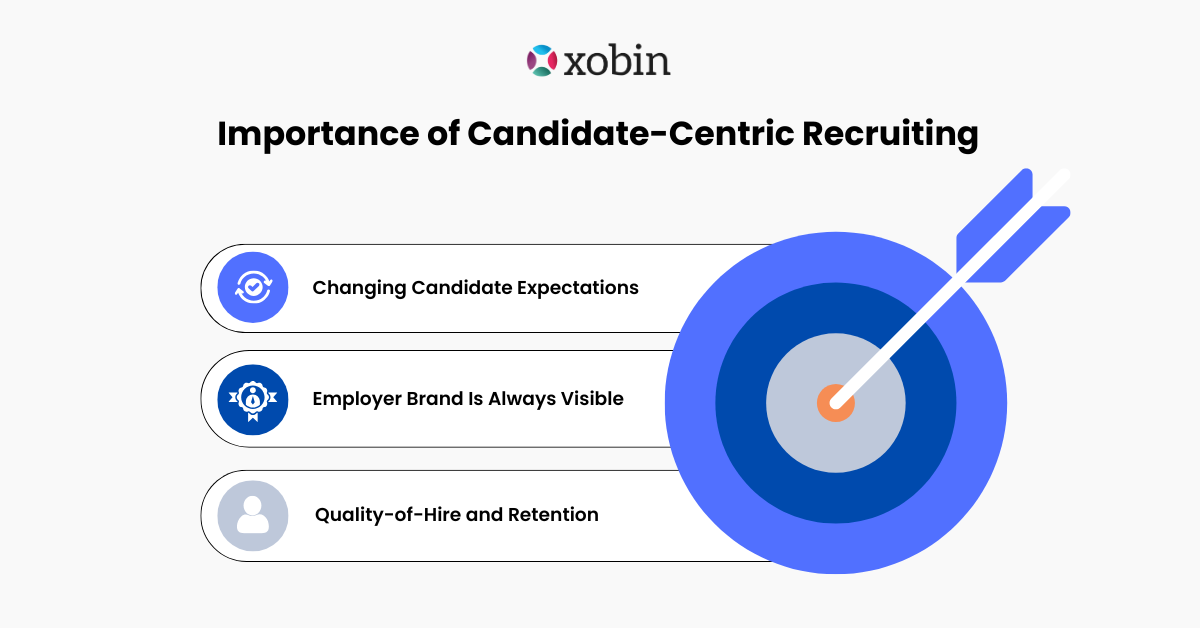
The shift from process-driven to candidate-driven hiring emerges from changes in labor markets, technology, and workforce expectations. Therefore, understanding why candidate-centric recruitment matters helps leaders prioritize it effectively with clarity.
Changing Candidate Expectations
Today’s candidates expect transparency and personalization, which they experience as customers. As a result, they seek clear role expectations, timely updates, and fair assessments. However, when teams fail to meet these expectations, candidates disengage quickly. CareerBuilder reports over 60% of candidates abandon applications that feel overly complex or time-consuming.
Employer Brand Is Always Visible
Platforms like Glassdoor and LinkedIn have made candidate experiences public. A single negative hiring journey can influence thousands of future applicants. Conversely, a positive candidate-centric process turns even rejected candidates into brand advocates. For organizations competing for scarce skills, reputation has become a decisive advantage.
Quality-of-Hire and Retention
Candidate-centric recruitment improves quality-of-hire because it focuses on mutual fit, not just speed. When candidates understand the role, culture, and expectations clearly, early attrition reduces significantly. Moreover, fair and skills-based assessments lead to better role alignment and performance outcomes.
💡 Pro Tip: Treat candidates like long-term partners, not short-term applicants. Even rejected candidates may become customers, referrers, or future hires.
Core Principles of Candidate-Centric Recruitment
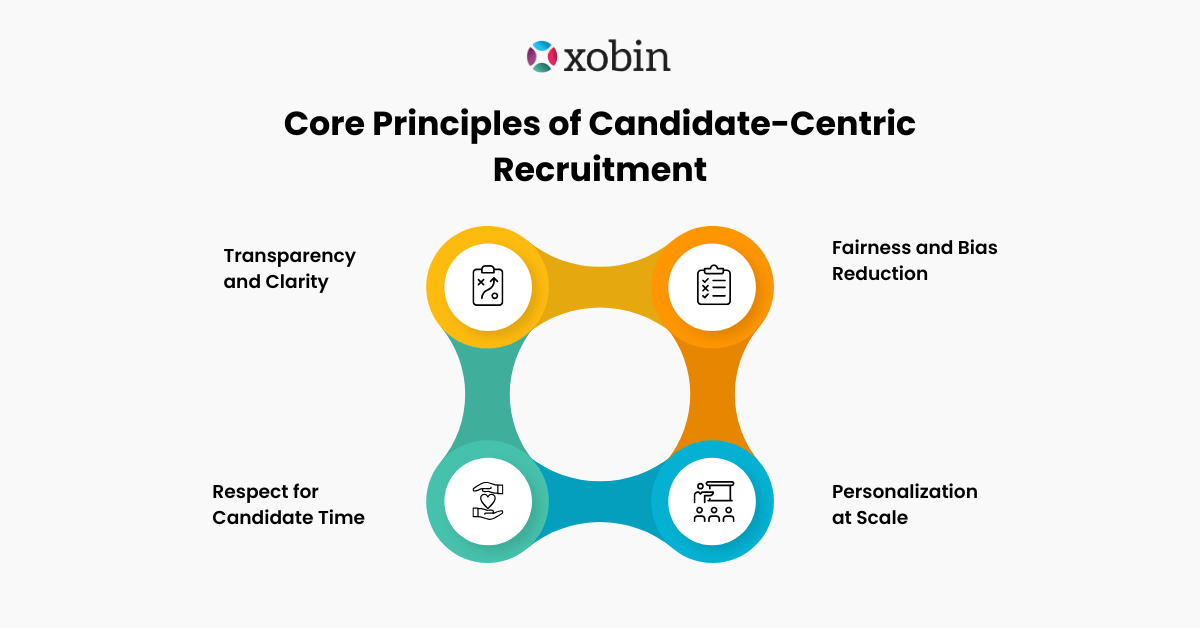
To apply candidate-centric recruiting effectively, organizations must anchor their strategy around a few foundational principles. These principles guide decision-making across tools, processes, and communication.
Transparency and Clarity
Transparency means being upfront about role expectations, assessment stages, timelines, and decision criteria. Candidates should never feel confused about where they stand or what’s next. This clarity builds trust and reduces anxiety, especially in high-stakes roles.
From a recruitment perspective, transparency also reduces inefficiencies. Clear job descriptions attract better-fit applicants, while well-defined evaluation criteria align hiring teams. Ultimately, transparency benefits both candidates and organizations.
Fairness and Bias Reduction
Candidate-centric recruitment prioritizes fairness by minimizing subjective and biased decision-making. Structured interviews, standardized assessments, and skills-first evaluations ensure candidates are judged on capability rather than background, pedigree, or familiarity.
This matters strategically because biased hiring not only restricts diversity but also creates compliance and reputational risks for organizations. Therefore, fair hiring practices signal integrity and inclusiveness, values expected by today’s workforce.
Respect for Candidate Time
Long hiring cycles and redundant interviews are among the top candidate frustrations. A candidate-centric approach streamlines processes, removes unnecessary steps, and ensures every interaction adds value. Respecting candidate time demonstrates professionalism and operational maturity.
Personalization at Scale
While hiring at scale, organizations must still make candidates feel seen. Personalization does not require manual effort; it requires smart use of data and technology. Tailored communication, relevant assessments, and role-specific feedback significantly enhance candidate perception.

Want to reduce candidate drop-offs and improve acceptance rates? Start by auditing your hiring communication today.
Book A DemoHow to Implement Candidate-Centric Recruitment Process
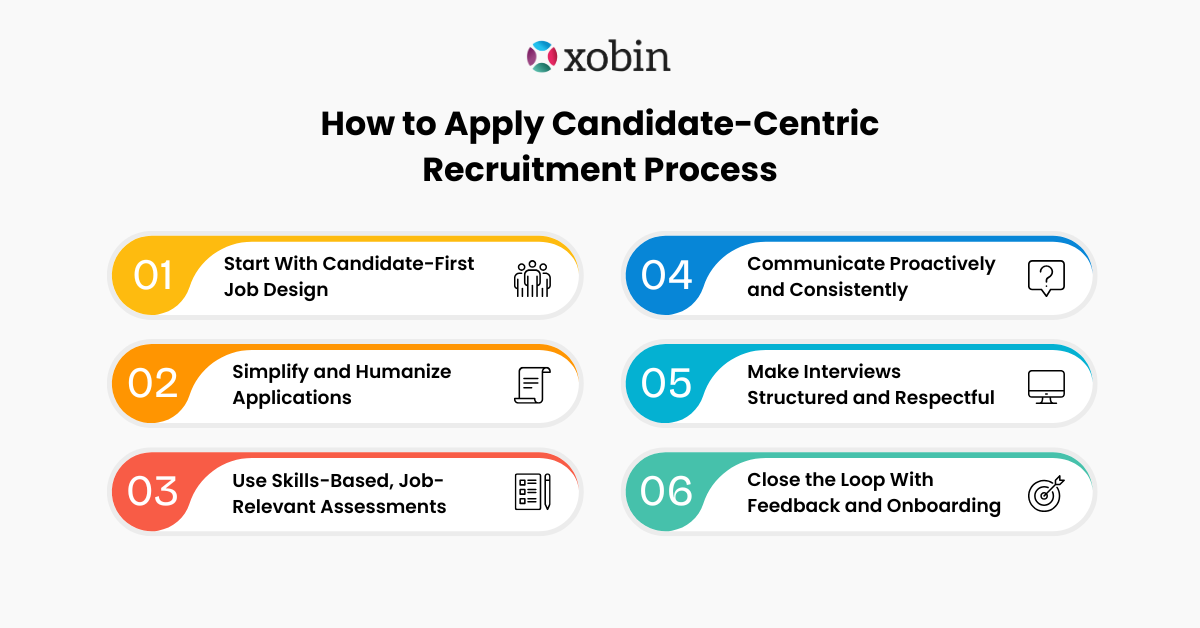
Translating philosophy into practice requires intentional process design. Below are the most effective ways to implement a candidate-centric recruitment process across the hiring lifecycle.
1. Start With Candidate-First Job Design
Candidate-centric hiring begins before applications open. Job descriptions should focus on outcomes, skills, and growth opportunities rather than exhaustive wish lists. Overloaded requirements discourage capable candidates, particularly from underrepresented groups.
Clear job design improves applicant quality and reduces mismatched expectations. Additionally, highlighting purpose, impact, and learning opportunities appeals strongly to modern professionals who value meaning alongside compensation.
2. Simplify and Humanize Applications
Lengthy forms and repetitive data entry are major drop-off points. A candidate-centric process minimizes friction by using resume parsing, mobile-friendly applications, and clear instructions.
However, simplicity should not compromise data quality. Smart screening mechanisms can collect necessary information without burdening candidates. The goal is to reduce effort while maintaining relevance.
3. Use Skills-Based, Job-Relevant Assessments
Skills-first assessments drive candidate-centric recruitment forward today. Therefore, rather than trusting resumes as stand-ins for talent, organizations actively assess candidates on what truly counts for the role: skills, behaviors, and problem-solving ability.
Well-designed assessments provide candidates with a fair opportunity to demonstrate competence, regardless of background. They also increase confidence in hiring decisions and reduce unconscious bias.
💡 Pro Tip: Candidates are more accepting of rejection when they believe the assessment was fair, relevant, and objective.
4. Communicate Proactively and Consistently
Silence is one of the most damaging candidate experiences. Candidate-centric hiring prioritizes timely updates, clear expectations, and honest feedback where possible. Even automated updates, when well-written, reduce uncertainty and build goodwill.
For leadership roles and niche talent, personalized communication becomes even more critical. Consistency across touchpoints reinforces trust in the organization.
5. Make Interviews Structured and Respectful
Unstructured interviews feel unclear to candidates and lead to uneven decisions. In contrast, structured interviews use predefined questions and scoring rubrics to improve fairness and build candidate confidence.
Respect shows when interviewers stay prepared, punctual, and aligned. Candidates read organizational culture from interview behavior, while a disorganized interview signals deeper operational problems.
6. Close the Loop With Feedback and Onboarding
Candidate-friendly recruitment process does not end at offer acceptance. Smooth onboarding validates the hiring experience and accelerates productivity. Clear first-week plans, role clarity, and early feedback loops reinforce the candidate’s decision to join.
Even for rejected candidates, closing the loop matters. While detailed feedback may not always be feasible, timely closure preserves brand equity and candidate trust.
How Technology Enables Candidate-First Recruitment
Technology plays an essential role in making candidate-first hiring scalable. Without automation and data, delivering consistent, high-quality candidate experiences becomes challenging, especially at scale.
AI-powered assessments support skills-first hiring by measuring candidates on real job skills instead of resumes alone. Automated communication tools ensure candidates receive timely updates without manual work. Video interviews reduce scheduling friction while maintaining a human connection.
Importantly, technology further supports fairness and compliance. Standardized assessments, audit-ready scoring, and secure data handling protect candidates and organizations. When used thoughtfully, recruitment technology strengthens, not replaces, the human side of hiring.
💡 Pro Tip: Use technology to remove friction, not humanity. Automation should enhance clarity and fairness, not create distance.
Turn Candidate-Centric Hiring Into a Competitive Advantage with Xobin!
Candidate-centric recruitment works only when strong intent meets strong execution, and that’s precisely where Xobin plays a pivotal role. Xobin helps organizations deliver fair, fast, and engaging hiring experiences by replacing resume-led guesswork with skills-first, AI-powered assessments, structured interviews, and transparent evaluations.
From customized assessments and bias-free screening to automated communication, video interviews, and actionable hiring insights, Xobin makes sure every candidate interaction feels respectful and relevant without slowing down hiring velocity. As a result, you see higher offer acceptance, stronger employer branding, and hires who truly perform.
If you’re ready to shift from process-heavy hiring to people-first, data-backed recruitment, it’s time to experience Xobin in action. Book a personalized demo today and create a hiring experience candidates remember.
FAQs
1. What is candidate-centric recruitment in simple terms?
Candidate-centric recruitment is a hiring approach that prioritizes the candidate’s experience, fairness, and transparency throughout the recruitment process.
2. How does candidate-centric hiring improve quality-of-hire?
By focusing on skills-based assessments and clear role alignment, it ensures better job fit and reduces early attrition.
3. Is candidate-centric recruitment slower than traditional hiring?
No. When supported by automation and structured assessments, it often reduces time-to-hire by eliminating inefficiencies.
4. Can candidate-centric recruitment work for high-volume hiring?
Yes. Technology enables personalization, fairness, and communication even at scale.
5. What role does technology play in candidate-centric hiring?
Technology helps automate communication, reduce bias, personalize assessments, and provide consistent candidate experiences.
6. How do you measure success in candidate-centric recruitment?
Key metrics include candidate satisfaction, drop-off rates, offer acceptance, quality-of-hire, and early retention.