

Hiring today is about speed, accuracy, and delivering a consistent candidate experience at scale. Yet, many organizations still rely on spreadsheets, emails, and disconnected tools that slow hiring and increase the risk of poor decisions. This is where a Recruitment Management System (RMS) becomes essential.
Table of Contents
A modern RMS centralizes hiring workflows, reduces manual effort, and brings data-driven clarity to recruitment. In this blog, we’ll break down what a Recruitment Management System is, why it matters, and how it streamlines the hiring process end to end.
TL;DR – Key Takeaways!
- A Recruitment Management System centralizes and automates the entire hiring workflow.
- It automates sourcing, screening, interviewing, and decision-making.
- RMS improves time-to-hire, quality-of-hire, and candidate experience.
- Automation and analytics turn recruitment into a strategic function.
- Hiring decisions become more structured and data-driven
- Modern RMS platforms integrate ATS, assessments, interviews, and reporting.
- Ideal for scaling teams and high-volume recruitment
What is a Recruitment Management System?
A Recruitment Management System is a software solution that helps organizations plan, execute, and optimize their recruitment funnel from start to finish. It acts as a centralized hub for managing job openings, applications, candidate communication, interviews, and hiring decisions.
Instead of relying on disconnected tools, an RMS brings everything together in one place. Recruiters and hiring managers can track candidates, collaborate on feedback, and ensure consistency across hiring stages.
More importantly, an RMS transforms recruitment from a manual, reactive function into a structured and measurable business process. For top leaders, this means better visibility into hiring performance and stronger alignment with workforce planning goals.
Key Features of a Recruitment Management System
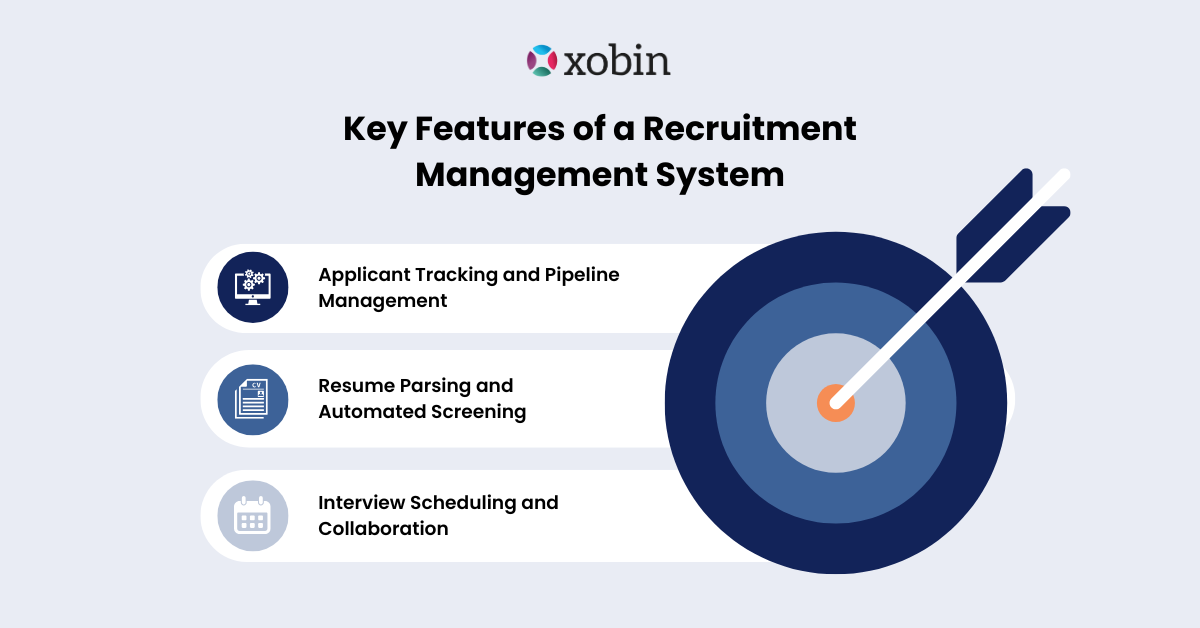
1. Applicant Tracking and Pipeline Management
At the core of any RMS is applicant tracking. It allows recruiters to capture applications, organize candidates into stages, and monitor progress in real time.
This structured pipeline prevents candidates from falling through the cracks. Hiring managers can instantly see who is shortlisted, interviewed, or awaiting feedback, improving accountability and speed.
2. Resume Parsing and Automated Screening
Manual resume screening is time-consuming and inconsistent. A Recruitment Management System uses resume parsing to extract key information like skills, experience, and qualifications.
Automated screening then shortlists candidates based on predefined criteria. This ensures fair evaluation and helps recruiters focus only on the most relevant profiles.
💡 Pro Tip: Automated screening reduces unconscious bias by focusing on skills and job fit rather than subjective impressions.
3. Interview Scheduling and Collaboration
Interview coordination often involves endless emails and calendar conflicts. A Recruitment Management System streamlines this by automating interview scheduling, panel coordination, and reminders. Candidates can select available slots, while interviewers receive centralized schedules.
Additionally, all interview feedback is stored centrally. This enables collaborative hiring, where HR, technical teams, and business leaders evaluate candidates using the same data.
How a Recruitment Management System Streamlines the Hiring Process
Centralized Recruitment Workflow
An RMS eliminates scattered hiring data. Job postings, resumes, interview notes, and decisions are all managed in one system.
This centralization improves transparency and ensures every candidate follows a consistent hiring process. It also simplifies compliance and audit readiness for regulated organizations.
Automation Across Hiring Stages
Automation is the biggest efficiency driver in a Recruitment Management System. Tasks like job posting, candidate emails, assessment triggers, and follow-ups happen automatically.
As a result, recruiters spend less time on admin work and more time engaging with candidates and hiring managers. This directly reduces hiring cycle time.
Data-Driven Hiring Decisions
A Recruitment Management System provides reports and dashboards that track key hiring metrics such as:
- Time-to-hire
- Source effectiveness
- Candidate conversion rates
- Recruiter productivity
These insights help leadership identify bottlenecks and continuously improve hiring outcomes.
Benefits of Using a Recruitment Management System
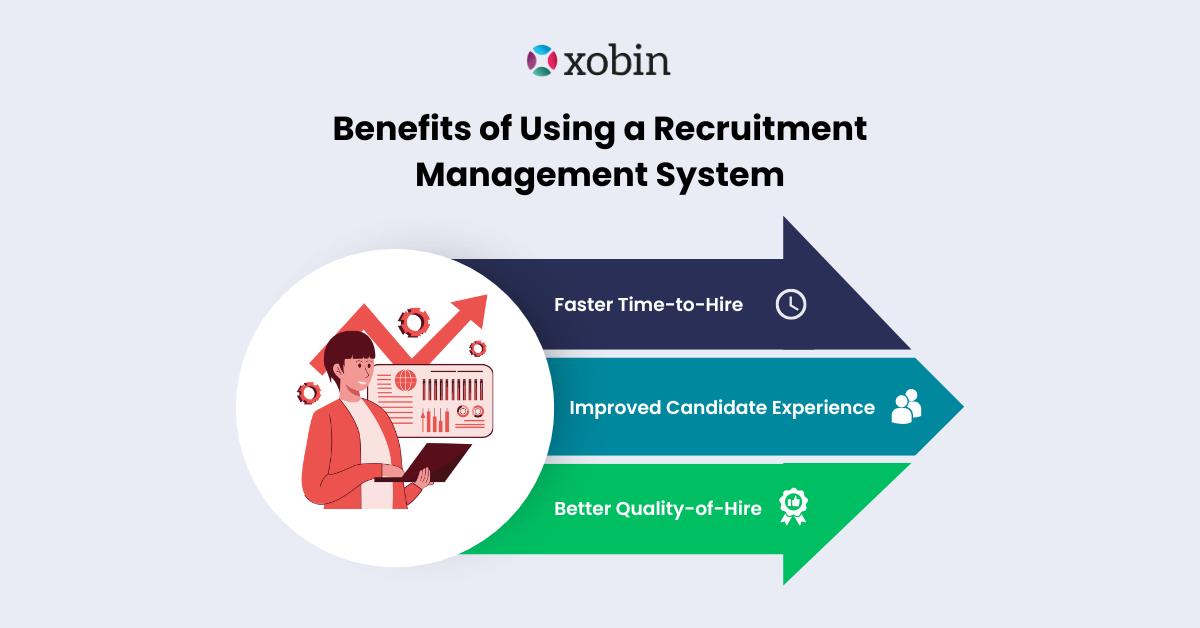
Faster Time-to-Hire
Speed is a competitive advantage in talent markets. By automating screening, scheduling, and communication, a Recruitment Management System removes delays that traditionally slow hiring. Faster processes mean top candidates are less likely to drop out or accept competing offers.
Improved Candidate Experience
Candidates judge employers by their hiring experience. An RMS ensures timely communication, clear status updates, and smoother interactions. This transparency builds trust and strengthens employer branding, even among candidates who are not selected.
Better Quality-of-Hire
Structured workflows, standardized assessments, and data-backed evaluations lead to better hiring decisions. Over time, organizations using RMS platforms see improvements in performance, retention, and cultural fit.
💡 Expert Insight: Organizations with structured recruitment systems are significantly more likely to improve quality-of-hire compared to those using ad-hoc processes.
Modernize Your Recruitment Stack with Xobin!
While a Recruitment Management System improves process efficiency, combining it with skills-based hiring delivers the best results. Xobin strengthens recruitment management by integrating AI-powered assessments, an Applicant Tracking System, video interviews, and recruitment automation into one platform.
With Xobin, recruiters can:
- Automatically screen candidates using role-specific skill tests
- Sync assessment scores directly into the ATS
- Trigger interviews and reminders without manual effort
- Access actionable hiring reports for better decision-making
When combined with advanced assessment and automation capabilities, platforms like Xobin help organizations not only streamline hiring but also improve quality-of-hire and long-term performance. If you’re ready to modernize your recruitment strategy, now is the time to act. Book a personalized demo today and see how Xobin can elevate your hiring process.
FAQs
1. What is a Recruitment Management System used for?
A Recruitment Management System is used to manage and automate the end-to-end hiring process, from applications to final hiring decisions.
2. How does an RMS differ from an ATS?
An ATS focuses mainly on tracking applicants, while an RMS covers the broader recruitment lifecycle, including screening, interviews, automation, and analytics.
3. Can small businesses benefit from a RMS?
Yes. Small businesses benefit from reduced manual work, faster hiring, and better candidate experiences with limited resources.
4. Does a Recruitment Management System reduce hiring bias?
Yes. Standardized workflows, assessments, and data-driven evaluations help minimize unconscious bias.
5. How does RMS improve candidate experience?
It ensures timely communication, transparent processes, and smoother interactions throughout the hiring journey.
6. Is RMS suitable for high-volume hiring?
Absolutely. Automation and scalable workflows make RMS ideal for high-volume and multi-location hiring.