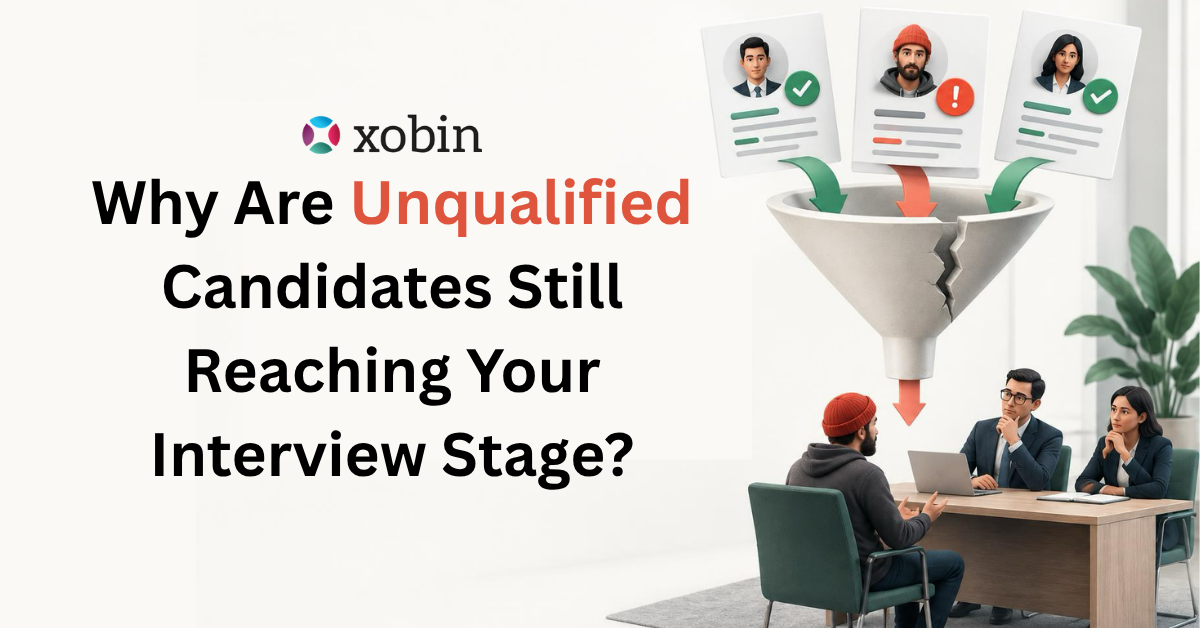

Competency gaps are now one of the biggest barriers to business growth. As organizations scale, traditional job descriptions often fail to capture the behavioral, functional, and leadership competencies needed for high performance. This is where competency mapping becomes indispensable. It helps companies identify what “great performance” truly looks like, align employees with strategic goals, and make data-driven talent decisions across hiring, training, promotion, and succession planning.
In this blog, we’ll break down the process, benefits, and best practices of competency mapping and show how modern HR teams use it to build future-ready workforces.
TL;DR – Key Takeaways!
- Competency mapping identifies the skills, behaviors, and attributes required for successful job performance.
- It improves hiring accuracy, performance management, skill-gap analysis, and leadership development.
- The competency mapping process includes role analysis, data collection, competency framework creation, validation, and implementation.
- Best practices include aligning with business goals, using data-driven assessments, and keeping frameworks updated.
- Platforms like Xobin provide AI-based assessments and analytics to simplify competency measurement and benchmarking.
What Is Competency Mapping?
Competency mapping is the structured process of identifying and documenting the knowledge, skills, behaviors, traits, and attitudes required for employees to perform specific roles effectively. These competencies serve as a blueprint for evaluating job fit, developing training plans, and shaping succession strategies.
At its core, competency mapping answers three strategic questions:
- What does success look like for each role?
- Which competencies differentiate high performers from average performers?
- How can we measure and develop these competencies in a scalable way?
Additionally, competency mapping for employees ensures organizations move from experience-based decisions to data-driven talent management, strengthening workforce planning and organizational capability.
 Pro tip
Always differentiate between threshold competencies (essential for basic job performance) and differentiating competencies (traits that make top performers stand out). This distinction boosts accuracy in hiring and development.
Pro tip
Always differentiate between threshold competencies (essential for basic job performance) and differentiating competencies (traits that make top performers stand out). This distinction boosts accuracy in hiring and development.
Why Competency Mapping Matters Today
The shift toward skills-first hiring, remote work models, and rapid digital transformation has made traditional job descriptions insufficient. Competency mapping offers a strategic advantage by creating clarity both for organizations and employees.
Enhances Hiring Accuracy
Competency-based hiring reduces guesswork. Instead of depending on subjective judgments, HR teams evaluate candidates against standardized, role-specific criteria. This leads to higher quality-of-hire and fewer mis-hires, which is crucial, as hiring mistakes can cost up to 30% of annual salary, according to SHRM.
Strengthens Performance Management
Competency maps help employees understand exactly what is expected of them. Managers also gain structured rubrics for evaluation, enabling fair and objective performance reviews.
Drives Training and Development
With clear competency frameworks, L&D teams can identify skill gaps and build targeted training programs that directly align with business priorities.
Supports Leadership Development
Leadership roles require behavioral competencies such as decision-making, resilience, and strategic thinking. Competency mapping ensures your future leaders are assessed and groomed with role-specific indicators of success.
Types of Competencies in Competency Mapping
Competency frameworks typically include four categories. Each contributes to building a comprehensive understanding of job success.
1. Core Competencies
These are universal competencies expected from every employee, such as teamwork, communication, accountability, and adaptability. They reflect the organization’s culture and values.
2. Functional Competencies
These relate to the technical or domain-specific skills needed to perform the job. For instance, a finance analyst may need financial modeling and audit knowledge, while a developer needs coding proficiency and debugging skills.
3. Behavioral Competencies
Behavioral traits such as emotional intelligence, leadership, and conflict resolution help predict how an employee will perform under different situations.
4. Leadership Competencies
For mid-senior roles, leadership competencies measure strategic thinking, decision-making, people management, and vision alignment.
Together, these competencies offer a multi-dimensional perspective of employee performance.
The Competency Mapping Process: Step-by-Step
A well-executed competency mapping process ensures reliability, consistency, and strategic alignment. Below is the competency mapping process used by HR leaders and organizational development teams.
1. Role Identification and Job Analysis
Start by selecting roles for competency mapping. Conduct a detailed job analysis to understand responsibilities, challenges, stakeholder expectations, and performance indicators. This step forms the foundation of the competency model.
2. Data Collection from Multiple Sources
To ensure accuracy, competency mapping uses a mix of qualitative and quantitative data:
- Interviews with high performers
- Focus group discussions
- Manager feedback
- Observation of job tasks
- Psychometric assessments
Using diverse inputs eliminates bias and ensures the competencies reflect real-world demands.
3. Identifying Required Competencies
Based on the collected data, identify the core, functional, and behavioral competencies essential for success in the role. Each should be measurable, observable, and clearly defined.
4. Creating the Competency Framework
Document the competencies along with:
- Definitions
- Behavioral indicators
- Proficiency levels (basic → advanced → expert)
This structured approach helps standardize expectations across the company.
5. Validation with Stakeholders
Share the competency model with managers, employees, and HR leaders for validation. This ensures the framework is practical, unbiased, and aligned with business needs.
6. Implementation Across HR Processes
Competency frameworks must be integrated into:
- Hiring and assessments
- Performance reviews
- Training and development
- Career pathing
- Leadership programs
Competencies should guide decisions at every stage of the employee lifecycle.
7. Continuous Review and Updating
Competencies evolve with market needs and technology shifts. Reviewing frameworks annually keeps them relevant and impactful.
Pro tip
Test your competency dictionary in a pilot department before a full rollout. This helps refine indicators and remove ambiguity.
Benefits of Competency Mapping for Modern Organizations
Competency mapping delivers value across talent acquisition, performance management, and workforce development.
1. Improved Hiring Accuracy and Reduced Bias
By using competency-based assessments, recruiters make decisions based on objective indicators rather than intuition. This strengthens fairness and diversity efforts.
2. Clearer Performance Expectations for Employees
Employees gain clarity on what’s needed to progress, increasing motivation and ownership. Managers can also provide structured, actionable feedback.
3. Better Skill Gap Identification
Competency mapping helps organizations understand where their workforce currently stands and which skills need development, which is critical for fast-changing industries.
4. Stronger Succession Planning
Leadership readiness assessments become more precise when anchored in competency frameworks. This ensures a pipeline of capable leaders.
5. Enhanced Learning & Development ROI
Training programs become more effective when mapped directly to identified gaps. This avoids generic training and maximizes L&D investments.
6. Consistent Organizational Culture
Core competencies help reinforce company culture and values across all levels.
Best Practices for Effective Competency Mapping
To maximize impact, competency mapping must be strategic, data-backed, and thoughtfully executed.
1. Align Competencies with Business Strategy
Competency models must directly support organizational objectives. For example, a company prioritizing innovation should emphasize competencies like creativity, experimentation, and agility.
2. Use Assessments to Validate Competencies
Relying solely on interviews or manager inputs may introduce bias. Psychometric tests, skills assessments, and behavioral indicators help validate competency accuracy.
3. Avoid Overloading Competency Frameworks
Adding too many competencies makes models unrealistic and difficult to execute. Aim for 8–12 core and role-specific competencies per job.
4. Ensure Behavioral Indicators Are Observable
Vague descriptions like “good communication” should be replaced with clear indicators such as: “Explains ideas concisely and adapts tone based on audience.”
5. Train Managers on Competency-Based Evaluation
Managers must understand how to interpret competencies and evaluate employees consistently.
6. Regularly Update the Framework
As roles evolve due to automation, technology, or market shifts, competency models must be updated to stay relevant.
Hire Better Using Xobin!
Competency mapping becomes truly powerful when supported by accurate, scalable, and objective assessments, and that’s exactly where Xobin excels.
Xobin’s AI-powered talent assessment platform helps organizations measure competencies using 3,400+ skill tests, psychometric evaluations, communication assessments, coding simulators, and video interviews. These tools enable HR teams to validate competencies with real-world, role-specific evaluations.
Xobin also offers AI-based scoring, benchmarking, and detailed competency reports, giving CHROs and hiring managers a complete competency profile for every candidate or employee. Additionally, advanced AI proctoring ensures integrity in assessments, while actionable reports highlight strengths, weaknesses, and development areas.
Whether you’re hiring, conducting skill-gap analysis, or planning internal mobility, Xobin provides the clarity and objectivity needed to build a competency-driven workforce.
If you’re ready to transform your hiring and talent development with competency-based insights, book a personalized demo with Xobin today.
FAQs
What is competency mapping in HR?
Competency mapping is the method of identifying and documenting the skills, behaviors, and traits needed for successful job performance.
Why is competency mapping important?
It improves hiring accuracy, strengthens performance management, identifies skill gaps, and supports training and leadership development.
How is competency mapping used in hiring?
Organizations use competency-based assessments, structured interviews, and behavioral indicators to evaluate whether candidates fit role requirements.
What are the main steps in competency mapping?
Role analysis → data collection → identifying competencies → building competency framework → validation → implementation → review.
How often should competency frameworks be updated?
Ideally annually, or whenever organizational strategy or job roles evolve.
Can competency mapping improve employee retention?
Yes. Clear expectations, structured development paths, and unbiased evaluations increase job satisfaction and reduce turnover.