

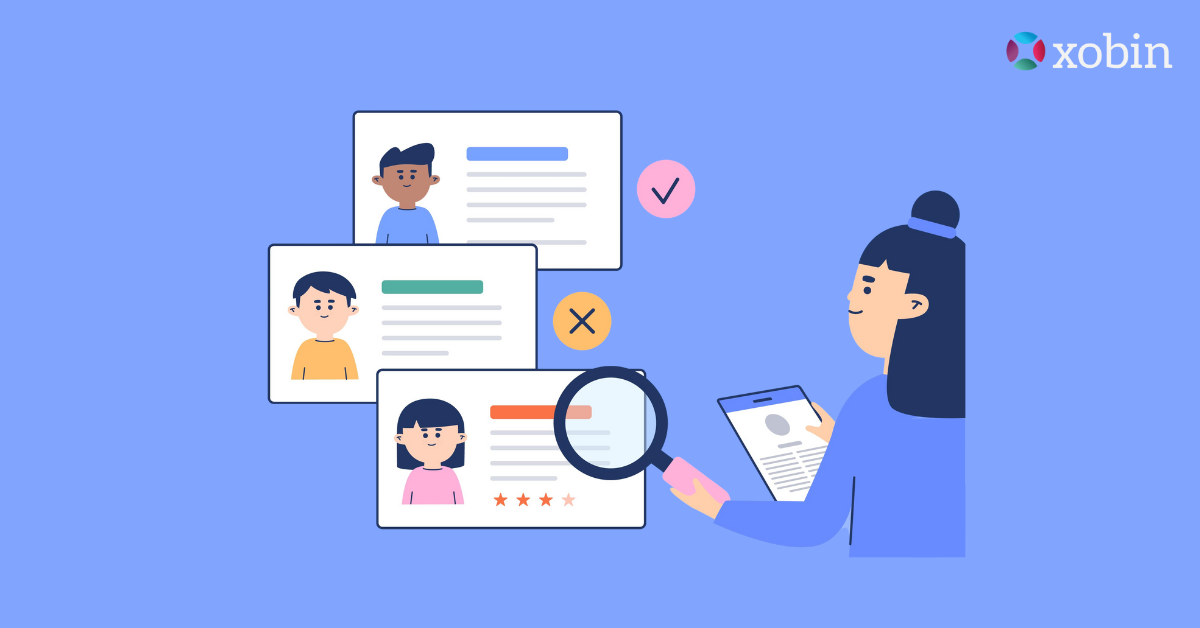
In a talent market this crowded, leaning only on gut instinct can quietly undermine hiring decisions and often without anyone noticing at first. Important signals slip through the cracks. Bias, even when unintentional, finds its way into interviews. And evaluations differ depending on who’s asking the questions. Over time, these gaps show up as costly mis-hires. Evidence-based hiring takes a different route. Instead of relying on assumptions, it grounds decisions in real, measurable insights.
Table of Contents
When hiring choices are backed by evidence, organizations see stronger quality of hire, fairer evaluations and more precise alignment between talent decisions and business goals.
This blog explores what evidence-based hiring actually means, why intuition-led approaches are no longer sufficient and how data-driven methods are reshaping the way modern recruitment works.
TL;DR – Key Takeaways!
- Evidence-Based Hiring uses data, not intuition, to make hiring decisions.
- It improves quality-of-hire, reduces bias, and lowers hiring costs.
- Methods include skills assessments, structured interviews, and predictive analytics.
- Data-driven hiring directly links recruitment decisions to business outcomes.
- Organizations using evidence-based methods consistently outperform intuition-led hiring.
What Is Evidence-Based Hiring?
Evidence-based hiring is a structured approach to recruitment where decisions are guided by objective data rather than opinions or instincts. Instead of asking, “Do I like this candidate?” recruiters ask, “What evidence shows this candidate will succeed in this role?” This evidence comes from validated assessments, historical performance data, structured interviews, and predictive analytics.
At a deeper level, evidence-based hiring brings the same discipline to talent choices that companies expect in finance or operations. It pulls together data from skills tests, psychometric assessments, structured interviews, plus real on-the-job performance signals to forecast success. Research from the Society for Human Resource Management shows structured, data-backed hiring lifts quality-of-hire by more than 25% versus unstructured approaches.
Consistency is another significant advantage. Every candidate is measured against the same standards which minimizes the influence of bias, assumptions or even an interviewer’s mood on a given day. As hiring data accumulates, organizations gain clearer insight into which signals truly predict performance and can fine-tune their models accordingly. For leadership teams, this shift elevates hiring from a largely subjective HR task into a measurable, accountable and strategically driven business decision.
Why Intuition-Led Hiring No Longer Works
For decades, hiring relied heavily on experience and “gut feel.” While intuition can add context, research consistently shows it performs poorly when used alone. Human judgment is vulnerable to unconscious bias, overconfidence, and pattern-matching that favors familiarity over competence.
Beyond that, intuition-led hiring breaks down at scale. When companies expand or recruit across regions, personal judgment introduces inconsistency. One interviewer may see promise while another sees risk, turning evaluation into noise instead of a signal. Over time, those gaps affect diversity, quality of hire, and the employer brand.
Predictability is another weak spot. Gut-driven decisions rarely generate data that can be reviewed or refined. If a hire fails, the reason often stays unclear. Evidence-based hiring works differently. It builds a feedback loop where outcomes are mapped to assessments and interviews, helping teams steadily improve decisions. In a business climate where each hire shapes revenue, culture, and execution, intuition alone no longer holds.
Core Principles of Evidence-Based Hiring
Objectivity Over Intuition
Evidence-based hiring cuts through personal bias by aligning everyone to clear, shared evaluation criteria. Candidates are measured on job-relevant capabilities, not interviewer opinions. The result is consistent hiring.
Predictive Validity
Not all data is valid. Evidence-based hiring focuses on predictors proven to correlate with job performance, such as cognitive ability, role-specific skills, and behavioral traits. According to meta-analyses cited by Harvard Business Review, work-sample tests and structured interviews have significantly higher predictive validity than resumes alone.
Continuous Measurement
Hiring does not end at offer acceptance. Evidence-based organizations track post-hire performance, retention, and engagement, feeding this data back into future hiring decisions. Over time, hiring accuracy improves systematically.
💡 Pro Tip: Track post-hire performance metrics for at least 6–12 months to validate whether your hiring data truly predicts success.
Key Evidence-Based Hiring Methods Explained
Structured Interviews
Structured interviews rely on consistent questions and clear scoring rubrics tied directly to role competencies. Responses are judged using defined benchmarks, which limits bias. Research finds these interviews predict job performance better than unstructured conversations.
Skills and Job-Simulation Assessments
Skills assessments focus on what actually matters: whether a candidate can do the job. From coding challenges to real-world sales scenarios or analytical problem-solving, these evaluations show competence in action, not just on paper. In fact, research consistently finds that work-sample tests rank among the most reliable indicators of on-the-job success.
Just as importantly, skills-based hiring shifts the focus from credentials to capability. When organizations stop over-indexing on degrees or pedigree, they unlock broader talent pools, improve workforce diversity, and still hire with confidence without lowering the bar.
Psychometric and Behavioral Testing
Psychometric assessments go beyond surface-level hiring signals. They measure cognitive ability, personality traits, and real-world work behaviors that resumes simply can’t capture. When applied thoughtfully and ethically, these assessments offer insight into cultural alignment, leadership readiness, and how well someone may collaborate within a team. Most importantly, they add meaningful depth where interviews often fall short.
Data-Driven Screening
Early hiring decisions no longer need to rely on instinct alone. With resume parsing, fitment scoring, and automated shortlisting, recruiters can reduce manual bias while accelerating the screening process. Because every candidate is evaluated using the same criteria, hiring teams spend less time sorting and more time engaging with applicants who are genuinely aligned with the role.
Hiring Analytics & Predictive Models
Today’s hiring platforms don’t just collect data, they connect the dots. By analyzing relationships between hiring inputs and on-the-job outcomes, analytics uncover patterns that humans often miss. Predictive models can estimate success likelihood, flag potential attrition risks, or highlight future training needs. As a result, recruitment evolves from guesswork into a disciplined, data-backed decision function.
💡 Pro Tip: Combine at least two independent predictors (for example, a skills test + structured interview). Multi-method evidence dramatically improves hiring accuracy.
How Data Improves Hiring Decisions in Practice
Data doesn’t just support hiring decisions, it reshapes how they’re made. The impact shows up in three core areas: accuracy, speed, and accountability.
To begin with, accuracy rises because hiring choices rely on proven indicators, not gut feelings or unchecked assumptions. When decisions are anchored in validated data, outcomes improve. In fact, LinkedIn insights show that organizations practicing data-driven hiring see employee performance increase by as much as 30%.
Speed is the next major shift. With automated assessments and real-time analytics, recruiters can identify strong candidates faster and move them forward with confidence. As a result, time-to-hire drops without compromising quality, an advantage that matters even more in highly competitive talent markets.
Accountability completes the picture. Evidence-based hiring leaves behind a clear, traceable decision path. Leaders can confidently explain why a particular candidate was selected, backed by data rather than opinion. This level of transparency is crucial for compliance, DEI initiatives, and credible executive reporting.
Challenges in Adopting Evidence-Based Hiring
Despite its advantages, adopting evidence-based hiring is not without challenges.
Resistance to Change
A frequent obstacle is simple resistance to change. Many hiring managers who rely on instinct can see data as cold, limiting, or overly mechanical. That hesitation is understandable. The shift happens when teams clearly see that evidence strengthens decisions rather than replacing human judgment. With the right context and education, data becomes a support system, not a constraint.
Tool Fragmentation
Another practical challenge is tool fragmentation. When assessments, interviews, and analytics live in separate systems, valuable insights get trapped in silos. As a result, evidence loses its story. Integration matters, but so does data quality. Poorly designed assessments or biased datasets don’t just weaken results, they erode confidence in the entire hiring process.
Ethical and Privacy Considerations
Ethics and privacy cannot be an afterthought. Candidates expect transparency, fairness, and secure handling of their information. Using validated tools, transparent governance, and compliant data practices builds trust over time. Organizations that approach evidence-based hiring with strong change management and ethical discipline consistently see better outcomes and long-term credibility.
How Xobin Enables Evidence-Based Hiring
Xobin helps organizations put evidence-based hiring into real, everyday practice at scale. Instead of relying on fragmented tools or gut-driven decisions, teams can bring assessments, analytics, and hiring workflows together in one unified platform. AI-powered skills assessments, psychometric evaluations, and coding simulations surface objective, role-specific evidence early in the hiring journey, where it matters most.
But hiring decisions don’t stop at test results. Xobin’s analytics and actionable reports make data easier to interpret and harder to ignore. Recruiters and leaders can benchmark candidates, compare talent cohorts, and uncover meaningful predictors of on-the-job success across roles. At the same time, built-in proctoring and compliance safeguards protect data integrity, while smart automation shortens time-to-hire without compromising quality.
What truly sets Xobin apart is how it turns hiring data into business insight. Instead of opinion-led judgments, organizations gain a consistent, predictive, and fair approach to talent decisions, one grounded in evidence, not assumptions.
If your goal is to hire with greater clarity and confidence, evidence-based hiring isn’t optional anymore. Book a personalized demo with Xobin today and see how data can reshape the way your organization makes hiring decisions.
FAQs
1. What is evidence-based hiring in simple terms?
It’s a hiring approach that uses data and objective evidence rather than intuition to select candidates.
2. How does data improve hiring decisions?
Data identifies predictors of job success, reduces bias, and improves consistency across hiring teams.
3. Are psychometric tests part of evidence-based hiring?
Yes. When validated, they provide insights into behavior, cognitive ability, and role fit.
4. Does evidence-based hiring improve diversity?
Yes. Objective assessments reduce unconscious bias and promote fair evaluation.
5. Is evidence-based hiring suitable for all roles?
Absolutely. It can be applied to technical, non-technical, leadership, and high-volume roles.