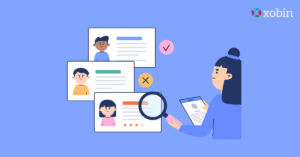


Data-driven recruitment has become a strategic priority for CHROs, talent heads, and CEOs navigating an increasingly competitive talent landscape. Traditional hiring methods such as gut instincts, resume-first filters, and subjective interviews simply cannot keep up with today’s demand for accuracy, fairness, and speed.
Table of Contents
Data-driven hiring solves this by using measurable insights, analytics, and predictive indicators to help companies hire better talent faster and more confidently.
In this blog, you’ll learn what data-driven recruiting truly means, why it matters, the complete process, and the most effective strategies to implement it in your organization.
TL;DR – Key Takeaways!
- Data-driven recruitment uses objective data, predictive analytics, and standardized evaluation to improve hiring quality and reduce bias.
- Key benefits: better quality of hire, faster hiring cycles, reduced turnover, stronger diversity, and better alignment with business goals.
- The process includes data capture → assessment → analysis → structured decision-making → continuous improvement.
- Top strategies include AI assessments, competency frameworks, automation, and hiring analytics dashboards.
- Xobin helps companies operationalize data-driven recruiting through AI evaluations, advanced AI proctoring, ATS integration, and rich analytics.
What Is Data-Driven Recruitment?
Data-driven recruitment is the practice of using quantifiable metrics such as skills test scores, behavioral data, predictive fitment scores, interview analytics, and performance benchmarks to make more accurate and unbiased recruitment decisions.
Instead of relying on intuition, recruiters and leaders use real evidence to determine:
- Who is qualified
- Who is most likely to perform well
- Who fits the role and culture
- Where hiring bottlenecks happen
- How to continually optimize the hiring process
A data-driven approach to hiring shifts recruitment from a reactive, subjective process into a strategic and evidence-based hiring system, strengthened by HR analytics, AI recruitment tools, and assessment-driven screening. Organizations practicing data-driven recruitment significantly improve fairness, speed, and decision quality while aligning talent strategy with business outcomes.
Want to eliminate guesswork and accelerate hiring accuracy? Start using AI-driven assessments and centralized analytics for more strategic decisions.
Book A DemoBenefits of Data-Driven Recruiting
1. Higher Quality of Hire
Hiring decisions based on comprehensive data such as skills assessments, cognitive ability results, and workplace behavior analytics dramatically improve prediction accuracy. Instead of being swayed by resumes or charisma, recruiters evaluate candidates on role-specific ability, job fit, and potential growth indicators.
Companies adopting skills-first hiring consistently outperform those using traditional screening because capability becomes the primary filter, not credentials or bias-prone variables.
Moreover, objective test results and structured interview data reduce inconsistencies and improve prediction accuracy, which is especially important in high-stakes roles.
2. Reduced Hiring Bias
Bias, whether conscious or unconscious, affects nearly every stage of hiring. Data-driven recruitment mitigates this by relying on measurable and repeatable signals instead of personal impressions.
For instance:
- Skills assessments evaluate ability, not background.
- Structured interviews reduce subjective scoring.
- Predictive analytics compare candidates against performance benchmarks.
This ensures fairness and strengthens DEI outcomes by widening access based on competence rather than pedigree.
Additionally, tools like AI-driven assessments, blind hiring frameworks, and structured interviews create consistency. Predictive analytics also help identify decision patterns that unintentionally disadvantage certain groups, offering a pathway toward more equitable recruitment.
3. Faster Time-to-Hire
Manual screening is slow, inconsistent, and taxing. Data-driven processes such as automated resume parsing, AI ranking, and skill assessments help filter high-quality candidates instantly. This reduces interview loops, accelerates decision-making, and prevents top candidates from accepting competing offers.
Analytics highlight:
- Where bottlenecks occur
- Which sources produce the best applicants
- Who is ready to advance instantly
Reducing time-to-hire is more crucial than ever as top candidates exit the market in 10 days or fewer.
On top of that, organizations using recruitment automation report significantly faster hiring cycles, allowing them to fill critical roles without operational delays.
4. Lower Turnover and Stronger Retention
Employees hired based on data-aligned competencies and behavioral indicators tend to stay longer and perform better. When job fit becomes quantifiable, misalignment decreases, leading to fewer early resignations and a more stable workforce. This directly strengthens long-term workforce planning and reduces rehiring costs.
5. Strategic Workforce Planning
Data helps leaders forecast skill shortages, role evolution, and future hiring needs. This shift helps HR transition from reactive hiring to proactive workforce strategy, strengthening organizational competitiveness.

The Data-Driven Recruitment Process (Step-by-Step)
Data-driven recruitment is not just about collecting numbers; it is about building a structured approach where insights drive each stage of recruiting. Here’s the complete data-driven hiring process:
1. Define Hiring Goals and Success Metrics
Before collecting data, organizations must establish what “success” looks like. This includes:
- Required skills and traits
- Cultural expectations
- Performance benchmarks
- KPIs like time-to-hire, funnel conversion, quality of hire, and source effectiveness
A clear competency map guides evaluation and prevents hiring teams from overvaluing subjective qualities.
2. Map Competencies and Create a Skills Blueprint
A competency framework outlines exactly what makes an employee successful in a particular role.
This includes:
- Technical competencies
- Soft skills
- Behavioral traits
- Cognitive abilities
High-quality talent is best identified through objective skills tests, behavioral assessments, and cognitive evaluations. These tools ensure that candidates advance based on ability rather than resume design or keyword stuffing.
Adopting pre-employment testing and competency-based hiring frameworks strengthens fairness and accuracy.
3. Use Data-Driven Screening Tools
The screening stage produces the highest volume of applicant data. Tools such as
- Resume parsers
- AI-fitment scores
- Aptitude and technical assessments
- Behavioral and psychometric tests
Help identify the best candidates objectively and rapidly.
Platforms like Xobin automate screening and highlight the top candidates based on skills, experience, and role fit.
4. Standardize Interviews With Structured Evaluations
Structured interviews are one of the strongest predictors of job performance. This includes:
- Predefined scoring rubrics
- Competency-based questions
- Standardized grading
- Panel collaboration
AI-enhanced interviews analyze tone, clarity, response relevance, and communication scoring, adding another layer of objective insight.
Interview scoring guidelines also help reduce bias and improve collaboration among interview panels.
5. Use Predictive Analytics to Rank Candidates
Predictive models evaluate candidates based on historical performance data and job success patterns. When combined with assessments and interview data, they provide evidence-backed recommendations.
This not only accelerates decision-making but also improves accuracy and reduces hiring risks significantly.
6. Final Decision-Making Based on Holistic Data
Instead of relying on hiring manager intuition, final decisions should combine:
- Assessment scores
- Interview feedback
- Behavioral indicators
- Fitment scores
- Skills benchmarks
- Cognitive metrics
- Job-fit analytics
This multi-layered data eliminates blind spots and builds confidence in the final selection.
7. Continuous Hiring Optimization
Analyze the performance of each hiring stage, from screening, assessments, and interviews to candidate drop-offs, to improve accuracy and speed. Leaders should continuously examine:
- Drop-off points
- Assessment effectiveness
- Interview score distribution
- Diversity outcomes
- New hire performance vs. predictions
Over time, organizations refine their models, reduce friction, and develop a scalable data-driven recruitment engine.
This helps refine evaluations, improve hiring speed, and enhance selection accuracy.
Winning Strategies for Implementing Data-Driven Hiring
Below are the most effective data-driven recruitment strategies adopted by high-performing organizations:
1. Build a Skills-First Hiring Framework
Transition from resume-first to skills-based hiring. Benchmark roles, define required skills, and assess capabilities early. This boosts fairness, strengthens diversity, and reduces time spent on unqualified applicants.
2. Build a Centralized Data & Analytics System
Use platforms that consolidate candidate assessments, ATS data, interview results, and analytics in one centralized dashboard. A unified system consolidates all hiring data, including tests, interviews, funnel metrics, and performance data, into one accessible view. This allows for:
- Deep analysis
- Benchmarking
- Predictive insights
- Better collaboration
- Faster decision-making
Analytics dashboards give CHROs and CEOs real-time visibility into hiring health. This improves decision quality, speeds up collaboration, and prevents information loss.
3. Adopt AI Tools to Reduce Manual Work
AI enhances nearly every stage of hiring:
- Resume parsing and matching
- Automated resume screening
- Interview analysis
- Proctoring
- Predictive performance scoring
AI helps teams hire at scale without sacrificing quality or fairness.
4. Implement Structured Assessments and Scoring Rubrics
Standardized assessments ensure fairness and consistency. They also make it easier to compare candidates because all data points are measurable and aligned with the competency framework.
5. Train Hiring Managers on Data Literacy
Hiring becomes more strategic when your leaders understand:
- How to interpret hiring metrics
- How to use analytics dashboards
- How structured evaluations work
Training ensures adoption and strengthens long-term talent strategy.
Improve End-to-End Data-Driven Recruitment with Xobin!
Xobin empowers organizations to implement end-to-end data-driven recruitment through advanced AI, structured assessments, analytics, and proctoring systems.
- AI Resume Parsing & Fitment Score
- 3,400+ assessments for skills, psychometric, cognitive & behavioral fit
- 2500+ assessments for job roles in any domain across industry
- AI answer evaluation and advanced proctoring
- Analytics Dashboards and Actionable Reports
Xobin equips companies to hire smarter, faster, and more objectively, removing bias, accelerating decisions, and improving quality of hire.
If you’re ready to move from intuition-led hiring to precision-driven talent decisions, book a personalized demo with Xobin today and transform your recruitment strategy.
FAQs
1. What is data-driven recruitment?
Data-driven recruitment is an approach that uses assessments, analytics, and objective metrics to identify, evaluate, and select the best candidates.
2. Why is data-driven recruitment important?
It improves hiring accuracy, reduces bias, speeds up decision-making, and improves long-term retention.
3. What tools are used for data-driven recruitment?
Common tools include skills assessments, ATS systems, AI-based resume parsing, predictive analytics, and interview scoring platforms.
4. How does data-driven recruitment reduce bias?
By relying on structured assessments and objective scoring instead of subjective opinions, it promotes fairer decision-making.
5. How can companies start implementing data-driven recruitment?
Begin by defining success metrics, adopting skills assessments, using analytics dashboards, and training hiring managers to interpret and act on data.
6. Can small companies adopt data-driven recruitment?
Yes, many low-resource teams begin with skills tests, structured interviews, and simple analytics before scaling to advanced tools.