
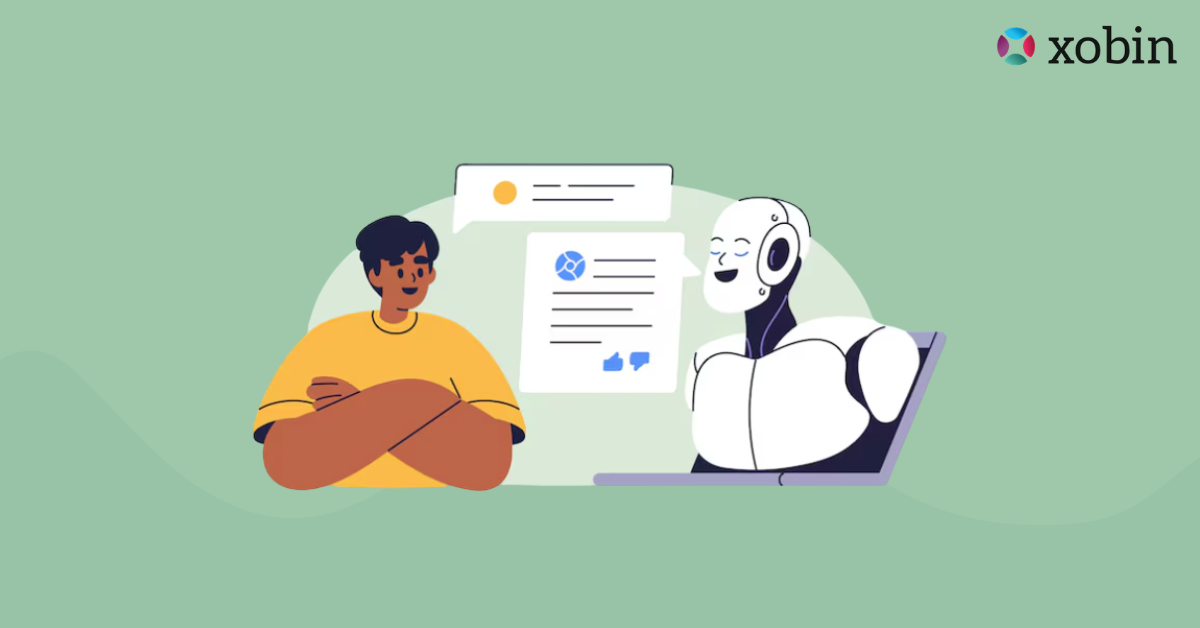
Your top candidate scored 96% on the coding test. Sounds great, until they join and can’t even write a basic function independently. Familiar situation?
It was a regular Tuesday morning. A mid-sized SaaS company in Bangalore sent out a technical hiring assessment to 200 applicants. By Wednesday evening, 53 had scored above 90%. The hiring manager was euphoric. Three months later, four of those “top performers” had quietly exited. Two were let go, one quit, and one never truly onboarded.
Table of Contents
What happened? ChatGPT happened.
Recruiters and CHROs across the globe are now asking the same urgent question: can ChatGPT pass your hiring tests as well as, or better than, real candidates? The answer is not comfortable. A free AI tool can sit silently alongside your candidate, read every question, and return a polished, near-perfect answer in under 10 seconds. No proctoring camera catches it. No resume flags it. Your ATS scores it and ranks that candidate in the top 5%.
If you are a recruiter, HR manager, CHRO, or founder still running the same pre-employment assessments you used in 2021, you are not screening candidates anymore. In many cases, you are screening ChatGPT. And guess what the scary part is that ChatGPT, bluntly, is very good at tests!
88% of students now use GenAI in assessments (HEPI, 2026)
53% of employers use AI in hiring (TechNode, 2024)
This blog unpacks exactly what ChatGPT can and cannot pass in your hiring process, why candidates are using it, what it is costing your organization, and what you should do about it right now. No fluff. Just the hard truths every talent leader needs in 2026.
The Uncomfortable Reality!
Let’s not bury the lede: YES, ChatGPT can pass many standard hiring assessments and in some cases, it can pass them better than most human candidates.
We are in the middle of a fundamental disruption to how talent is evaluated. The candidate assessment tools that worked for screening in 2019, such as MCQ tests, timed essay submissions, take-home coding challenges are being systematically defeated by generative AI tools that are free, fast, and available to every candidate on the planet.
| 80% of applicants for one software role tried to use ChatGPT on the hiring test Source: College Recruiter, 2025 | 0/37 interviewers could detect when candidates used ChatGPT in live coding rounds Source: interviewing.io, 2024 |
| 64% of recruiters noticed a spike in look-alike, AI-generated applications in 2024–25 Source: ResumeBuilder, 2025 | 68% of companies expect to use AI in recruiting by end of 2025 Source: ResumeBuilder, 2025 |
The irony is sharp: the same AI disrupting your screening is being adopted by your candidates and your own HR teams simultaneously. AI in hiring is a double-edged sword, and recruiters who don’t understand both edges will find themselves consistently misled.
The Problem Sitting Silently in Your ATS
Bad hires are expensive. The US Department of Labor estimates a bad hire costs at least 30% of that employee’s first-year salary. Multiply that across a hiring pipeline where AI-assisted cheating is silently inflating scores, and the financial exposure becomes staggering across industries, sectors, and geographies.
The real question HR leaders must confront today is not just whether AI is reshaping recruitment broadly. It is far more specific: can ChatGPT pass your hiring tests well enough to slip unqualified candidates through your screening funnel? Based on growing evidence from recruiting communities, academic research, and platform data, the answer is yes, and it is happening far more often than most organizations realise.
Since ChatGPT’s public debut in November 2022, AI-assisted assessment gaming has evolved from a curiosity into a structural flaw in most companies’ talent pipelines. As an HR leader, CHRO, or founder, you can no longer treat this as fringe behavior. It is mainstream. And it is quietly undermining the validity of your entire pre-employment testing strategy.
This surge in online hiring assessment cheating is no longer isolated, it is systemic and growing across industries.
| 53% of employers now use AI in hiring, nearly doubled from 26% in 2023 (TechNode / HeroHunt, 2024) | 70% of companies experimenting with GenAI are doing so within HR (BCG CHRO Survey, 2024) |
| 88% of students now use GenAI tools for assessments, up from 53% in 2024 (HEPI GenAI Survey, 2026) | >50% of organizations use pre-hire assessments in their hiring process (College Recruiter, 2025) |
What ChatGPT Can Actually Score on Your Assessments
Let’s be clear. ChatGPT does not perform the same across all hiring assessments. It does very well in some areas, while in others its performance is quite limited. Here’s what the research actually reveals.
Technical and coding tests
Technical and coding assessments are the most dramatically affected by AI-assisted cheating in hiring. Platforms that relied on take-home challenges like HackerRank, Codility, and similar tools are facing a crisis of validity. A candidate can copy a coding prompt, paste it into ChatGPT, and receive a working, well-commented solution within seconds.
GPT-4 scored in the 90th percentile on the Uniform Bar Exam, a result that stunned the legal community. It performs at an expert or near-expert level on SAT Math, LSAT, GRE, and numerous professional certifications. For a mid-level software developer assessment, ChatGPT will very likely outscore the average human candidate.
The notorious experiment by interviewing.io, in which zero out of 37 experienced interviewers could detect live ChatGPT use during coding rounds should serve as a wake-up call for every CTO and technical recruiter.
| PRO TIP FOR RECRUITERS If your coding test consists entirely of algorithmic problems solvable via copy-paste, assume a significant portion of your applicant pool has already tried ChatGPT on it. Xobin’s video-proctored assessments and smart browser controls are specifically built to prevent exactly this kind of external tool use, ensuring you are evaluating the candidate, not their AI assistant. |
Cognitive ability and aptitude tests
For text-based multiple-choice formats including numerical reasoning, verbal reasoning, and logical sequences, ChatGPT performs well above average. It excels when questions have objectively correct answers accessible via pattern recognition and knowledge retrieval.
A 2025 peer-reviewed study in Expert Systems with Applications (ScienceDirect) directly compared ChatGPT, Google Gemini, and Mistral against human DevOps experts assessing IT candidates. The finding: AI assessments showed no significant difference in average scores compared to human reviewers, while being significantly faster, though notably less consistent.
Personality and behavioral assessments
Candidates are increasingly feeding personality test questions into ChatGPT with prompts like: ‘I’m applying for a Sales Manager role. What’s the ideal answer here?’ While generative AI cannot perfectly predict proprietary psychometric algorithms, it can identify socially desirable response patterns well enough to game many off-the-shelf tests.
Situational judgement tests (SJTs) using complex multi-item rating formats are considerably harder for AI to ace. The more a test relies on nuanced contextual judgment, the less reliable AI assistance becomes.
| ✅ WHAT STILL WORKS Forced-choice formats where candidates must choose between two equally undesirable or desirable options are significantly harder for AI to game. Psychometric assessment companies like Xobin, Hogan, SHL, and Cubiks use these designs precisely because there is no obviously ‘correct’ answer to reverse engineering. |
Written Assessments & Case Studies
For roles in marketing, strategy, HR, consulting, and communications, written case studies have long been the gold standard. ChatGPT can now produce polished, well-structured, 800-word strategic memos in under 30 seconds complete with frameworks, data points, and executive recommendations.
The telltale signs of AI-generated written responses in hiring: overly structured formatting, absence of genuine personal anecdotes, lack of specificity to your company’s context, and near-perfect grammatical precision with zero authentic voice.
Video and async interview assessments
Here, AI can assist in preparation and answer scripting, but it cannot replace the human being on camera, at least not yet. The rise of voice-cloning and deepfake technology means this boundary deserves active monitoring in 2026.
The Hiring Test Verdict: Pass, Fail, or Partial?
So precisely where can ChatGPT pass your hiring tests and where does it fall short? This table gives every recruiter and hiring manager a clear reference point.
| Assessment Type | ChatGPT Performance | Risk Level |
| Coding/Technical Tests | High Risk — Passes | Very High |
| Cognitive/Aptitude (MCQ) | High Risk — Passes | Very High |
| Case Study Written Analysis | Partial Pass | Medium |
| Situational Judgement Tests | Partial Pass | Medium-Low |
| Personality Assessments | Resists Cheating | Low |
| Video/Async Interviews | Cannot Substitute | Low (for now) |
| Live Technical Interviews | Cannot Substitute | Low |
| WARNING – For Recruiters A viral Reddit post documented how 80% of software engineering applicants pasted a screenshot of the test into ChatGPT and all submitted the same wrong answer. The silver lining? Mass identical submissions are one of the easiest tells. The dangerous candidates are the ones who verify and personalize the AI output before submitting. |
Why Candidates Are Doing It (And Why You Cannot Fully Blame Them)
Understanding the motivations behind AI-assisted job test cheating is essential for designing a better hiring process, not just a more policed one.
The barrier to use is near-zero. ChatGPT is free. It responds in seconds. A candidate who has applied to 80 companies and faces 4 concurrent assessments due by Friday is operating under extreme pressure. As a result, candidates use different ways to cheat in online assessments, from AI tools like ChatGPT to browser switching, screen sharing, and even external help.
The moral hazard is real: if the platform has no proctoring and the cost of trying is zero, why not use every available resource?
“Every candidate who passes by gaming an assessment consumes recruiter time, interview slots, and onboarding costs before ultimately washing out.”
There is also a legitimate grey area. Many hiring managers privately acknowledge that using AI tools is itself a relevant skill in 2026. If a candidate can leverage AI to produce better outputs, is that not demonstrating the competency you actually need? This is a real philosophical challenge that every L&D professional and CHRO needs to address in their own way.
| RECRUITER ALERT Reddit communities dedicated to hiring have documented candidates pasting entire assessment screenshots into ChatGPT, then submitting the output verbatim without checking if the code even ran. This is not sophisticated. But it is happening at scale, across every industry and seniority level. |
Stop Testing Candidates. Start Testing Skills. Xobin's proctoring features are built to catch AI assistance during assessments in real time, so every score you see reflects a real human, not a chatbot.
Book A DemoThe Real Cost of AI-Assisted Cheating in Recruitment
Beyond the philosophical debate, the business impact of compromised hiring assessments is concrete and compounding.
| 30%+ productivity improvement reported by organisations using AI effectively in HR (BCG, 2024) | 7 in 10 employers in 2025 reported difficulty filling full-time roles despite high applicant volumes (HackerEarth, 2025) | 92% of organization report real, tangible benefits from using AI in HR processes (BCG CHRO Survey, 2024) |
When a candidate who cheated joins your organization, the damage cascades. Recruiter and hiring manager hours are wasted. Team trust erodes when the new hire cannot perform. Live projects and client deliverables get disrupted. Onboarding and replacement costs balloon. A single bad technical hire can cost 1.5 to 3x their annual salary in total replacement before accounting for team morale damage.
Also Read 👉 Is Your Recruitment Team Ready for AI Disruption?
The Recruiter’s Counter-Strategy: Designing for a Post-ChatGPT World
The solution is not to panic or abandon pre-employment testing. The best response is to fundamentally rethink what you’re trying to measure. Once you accept that ChatGPT can pass your hiring tests in their current form, you gain clarity on exactly what needs to change and you can build a hiring process that AI simply cannot fake.
Move from knowledge to application
ChatGPT knows facts. It can generate frameworks. What it cannot do is demonstrate genuine lived expertise under real-time conversational pressure. Move your signal-gathering toward structured live conversations, cross-functional case discussions, and probed problem-solving sessions.
Make Context Non-Generalizable
Design every assessment around information specific to your company, your exact customer base, your real current challenge, or a proprietary data scenario. If a candidate can answer your case study without knowing anything about your business, your assessment has no signal value. Specificity is your AI firewall.
Introduce live and proctored elements
Platforms like HackerEarth, Xobin, and TestGorilla now deploy smart browser technology that prevents tab switching, external resource access, and window resizing. Pair async tests with a short live follow-up where candidates explain their own answers. This single step exposes most AI-assisted submissions immediately.
| PRO TIP FOR CHROS Implement a ‘defend your work’ step: after any take-home assessment, schedule a 15-minute follow-up where the candidate walks through their solution and answers 2 to 3 spontaneous variations. Xobin’s playback video of the code editor feature lets you literally watch how a candidate coded, step by step, making it instantly clear whether the thinking was theirs. |
Use AI-resistant item types
Assessment science has decades of research on test security and gaming resistance. Xobin’s question bank of over 180,000 validated questions is refreshed every 3 months, specifically to prevent question leakage and pattern exploitation. Techniques include randomized item banks, adaptive testing, trace data collection, and multi-format mixed assessments built to resist the “smart roommate” problem, and they work equally well against ChatGPT.
Introduce Sequential Verification
Never let a written submission be the final signal. Always pair it with a verification conversation where candidates must extend, defend, and build on their written submission in real time. The gap between someone who genuinely wrote a response and someone who pasted ChatGPT’s output becomes glaring within the first two follow-up questions.
Redefine what “passing” means
If AI can score 90% on your current test, that test is probably measuring the wrong thing. The most valuable skills in the AI era are judgment, critical thinking, communication under ambiguity, and creative problem-solving. These are areas where ChatGPT produces plausible but generic outputs that experienced humans immediately identify as shallow.
Embrace AI as a Skill, Not a Disqualifier
Here’s the nuanced truth: 91% of companies want to hire candidates with ChatGPT experience (ResumeBuilder survey). The goal is not to catch candidates using AI, it’s to assess whether they’re using it thoughtfully, critically, and productively.
The most valuable candidates in 2026 and beyond will be those who can use AI tools intelligently while still demonstrating original thinking, sound judgment, and strong communication. Design your hiring process to distinguish AI-augmented candidates from AI-dependent candidates.
| 89.6% greater hiring efficiency is reported by organizations using AI in recruitment. Source: Workable AI Hiring Survey, 2024 | 58% of recruiters say AI reduces busywork, freeing them for relationship building. Source: Greenhouse, 2024 |
Find the right test for every role you hire for. From coding tests and psychometric assessments to cultural fit and video interviews, Xobin covers every stage of your hiring funnel in one platform.
Book A DemoHow to Future-Proof Your Hiring Assessments
Move to Skills-Based, Observable Hiring
Skills-based hiring, where candidates demonstrate competency through real work rather than proxies like degrees or test scores, is inherently more AI-resistant. A candidate completing a live 30-minute task, observed by a hiring manager who can ask clarifying questions in real time, cannot outsource their performance to ChatGPT without immediate exposure.
Invest in Structured Interviews, Not More Tests
Research consistently shows that structured behavioral interviews with standardized scoring rubrics are among the highest-validity predictors of job performance. They’re also among the hardest things for AI to fake convincingly in real time. When the STAR method is deployed by a trained interviewer who digs into specifics, it becomes a powerful signal.
| PRO TIP FOR RECRUITERS In every behavioral interview, after the candidate gives their STAR response, ask, ‘What would you do differently now?’ or ‘What’s something that almost went wrong that you didn’t mention?’ These probes reveal genuine reflective thinking. ChatGPT can generate a polished STAR story. It cannot simulate the hesitation, self-correction, and authentic nuance of someone genuinely remembering a real experience. |
Redesign L&D Assessment Frameworks Too
The same disruption hitting external hiring is hitting your learning & development assessments internally. Post-training tests, certification exams, and compliance assessments are equally vulnerable. L&D leaders need to design verification-based evaluation that tests application in context, not information recall.
Legal and Ethical Guardrails
As AI becomes embedded in hiring on both sides of the table, regulatory scrutiny is intensifying. New York City’s Local Law 144 requires bias audits for AI hiring tools. The EU AI Act classifies certain recruitment AI applications as high-risk. Any AI-assisted decision-making in your hiring process needs legal review and candidates deserve transparency about how AI is being used to evaluate them.
Also Read 👉 Compliance Guide on Global AI Recruitment Regulations
| 67% of candidates comfortable with AI screening, only if a human makes the final decision Source: Glassdoor Economic Research, 2024 | 40% reduction in time-to-hire when AI is integrated with ATS systems Source: HeroHunt.ai, 2025 |
The New Hiring Mindset: Test for What AI Cannot Fake
This is the strategic pivot every talent acquisition leader must make. AI-proof hiring assessments are not about locking candidates in a surveillance box. They are about deliberately measuring the human signal that AI cannot replicate.
- AI cannot draw on personal professional experience or failures to demonstrate learned judgment.
- AI cannot build real rapport with your team during a live collaborative exercise.
- AI cannot show intellectual curiosity, emotional adaptability, or resilience under live pressure.
- AI cannot demonstrate company-specific cultural alignment or stakeholder intuition.
- AI cannot take genuine accountability for mistakes in a real-time conversation.
| PRO TIP FOR FOUNDERS AND L&D LEADERS Consider reframing your assessment brief: “You may use any AI tool you wish.” Your submission will be evaluated on the quality of your thinking, not just your output.” This tests AI literacy, judgment in tool use, and the ability to add human value on top of AI scaffolding, which is precisely the skill profile that matters in 2026. |
The Final Verdict: What Every HR Leader Needs to Hear
YES, ChatGPT can pass your hiring tests. Not all of them. Not always reliably. But enough of them, enough of the time, that if you have not audited your assessment pipeline in the last 12 months, you are almost certainly making hiring decisions contaminated by AI-assisted submissions.
But here’s the reframe that separates reactive talent leaders from strategic ones: this is not a crisis, it’s a signal.
If ChatGPT can pass your hiring test, your test was probably already measuring the wrong things. The explosion of AI is simply making visible the limitations of assessments built for a world where information retrieval and template-following were meaningful proxies for capability.
The talent leaders who will win in 2026 and beyond are those who use this disruption as a forcing function to build hiring processes that measure what actually matters: judgment, creativity, adaptability, human connection, and the ability to apply knowledge under pressure with imperfect information.
Your hiring process is your first product experience for every candidate. Make it AI-era worthy.
Ready to Hire the Candidate, Not the Chatbot?
Xobin provides proctored assessments that identify real talent in 10x less time. One platform for skills tests, psychometrics, coding, and video interviews. Get started and book a personalized demo today!